Season 2, Episode 2: Why Trust at Work Is Breaking Down — and How Rebuilding It Changes Everything— with Minda Harts
Minda Harts on trust as the missing foundation at work, the seven trust languages, and why burnout, loneliness, and disengagement are often trust failures—not performance problems
A practical conversation about psychological safety, leadership, and how trust (not control) drives retention, productivity, and healthier workplaces
Summary
What if the reason work feels exhausting, isolating, or unsafe isn’t your performance—but a breakdown of trust? In this episode of Hard at Work, Ellen is joined by author, keynote speaker, and workplace thought leader Minda Harts (Talk to Me Nice, Right Within, The Memo) for a deeply practical conversation about why trust is missing in so many workplaces—and how rebuilding it changes everything.
Minda reframes trust not as a “soft skill,” but as the foundation of healthy workplace culture, psychological safety, and strong leadership. Together, they explore why mistrust has become normalized at work; how ambiguity, control, and outdated leadership models erode trust; and why burnout, disengagement, and loneliness are often symptoms of trust breakdowns rather than individual resilience failures. Minda introduces her seven trust languages—including transparency, follow-through, feedback, security, and acknowledgement—and explains how small, intentional leadership behaviors can rebuild trust even inside rigid or fast-moving systems.
This episode is especially relevant for leaders and managers navigating return-to-office mandates, constant change, and pressure from above while trying to support teams below. It’s also for employees wondering what to do when trust feels broken. You’ll leave with practical scripts, reflection questions, and a powerful reframe: trust is not about being perfect—it’s about being human, communicative, and consistent. And when trust is present, work doesn’t just feel better—it actually works better.
Takeaways
Trust isn't a buzzword—it's the foundation. Without trust, productivity, engagement, and retention tank. But it can be rebuilt with intention.
There are 7 trust languages: Sensitivity, transparency, security, demonstration, feedback, acknowledgment, and follow-through. Most people have a primary one—learn to speak it.
Leaders don’t need to have all the answers. What builds trust is honesty, respect, and communication—even when you don’t have it all figured out.
Flexibility and psychological safety go hand-in-hand. Treating employees like humans first allows for real productivity, not performative busyness.
Trust is good for the bottom line. Teams with high trust levels perform better and retain talent longer. Building trust is a business strategy, not a bonus feature.
Notable Quotes
"Trust begets trust. We can't build it if we don't talk about it."
"Just because something worked in 1998 doesn’t mean it’s the blueprint for 2025."
"When we don’t offer trust, we don’t get the best out of our people. Period."
"Workplaces are having a communication crisis—not just a trust problem."
"Your workplace doesn’t need a pizza party. It needs psychological safety."
Chapters
00:00 — Welcome + Introducing Minda Harts
01:27 — The Chief Trust Officer Mindset
04:30 — Why Trust is the Real Workplace Issue
06:51 — Trust, Loneliness, and Belonging
11:54 — Why Leaders Cling to Control
14:47 — The 7 Trust Languages + Practical Examples
22:50 — Trust, Burnout, and Speed Culture
27:23 — Flexible Work and Human-Centered Policies
32:06 — How Trust Impacts the Bottom Line
34:12 — What to Do When You Don't Trust Leadership
36:12 — Can Broken Trust Be Rebuilt?
43:26 — How to Have Hard Conversations with Respect
45:13 — Where to Find Minda + AI Trust Coach Tool
Keywords: burnout, workplace trust, leadership development, psychological safety, toxic work culture, employee retention, emotional labor, women at work, equity in the workplace, people management, trust in teams, workplace communication, manager training, feedback culture, remote work policies
Show Notes:
Find Minda online:
Website | LinkedIn | Instagram | YouTube | Facebook
Watch Minda’s LinkedIn Learning Course here
And if you’re interested in learning more about the Momentum Sessions, the three-session, affordable coaching package I announced during the episode, you can visit this webpage.
Transcript
Ellen Whitlock Baker (00:00.286)
Hello everyone and welcome to the Hard at Work podcast. I'm your host, Ellen Whitlock-Baker, and I am delighted to be joined today by the amazing Minda Hartz. Hi Minda!
Minda Harts (00:19.266)
Hey Ellen, how are you?
Ellen Whitlock Baker (00:21.258)
Well, I'm a little hoarse as you can tell, so I'm gonna let you do most of the talking, but I am so honored that you are here on the podcast. I have been following you for a long time, ever since your book, Within came out. And your new book, is Talk to Me Nice, is so good and we're gonna get into it today. But what do you want the listeners to know about you besides what might be in your bio, which I will have read already?
Minda Harts (00:23.31)
You
Minda Harts (00:50.862)
Well, I appreciate that question. I would say I'm in my era of helping companies have more harmonious relationships with their employees and their managers. And so I'm leaning into my chief trust officer bag right now. And so I do believe that if trust can be broken, in many cases, it can be rebuilt through intentionality. so
That's what I want people to know. That's what I feel like my purpose is just to create those opportunities for us to be better humans to each other.
Ellen Whitlock Baker (01:27.67)
That's amazing. Sorry, I was muting because my dog was barking. Chief Trust Officer is such a cool title. Does that exist anywhere or are you starting the trend? Yes. Yes. mean, it's so funny because you talk in the book a lot about HR and the history of
Minda Harts (01:39.894)
trying to start the trend and then maybe someone will hire me to be the chief trust officer.
Ellen Whitlock Baker (01:58.466)
HR not necessarily being for the worker, but being for the company. there's so many different and new and exciting ways to go about working with employees. And it all comes down to trust, which is so true. So in your first part of the book, you started with what's trust got to do with it. And for those of you who haven't read this book, Minda's got like song titles for almost every little subtitle. So you just kind of sing along your way through the book and laugh at her puns. But
Ellen Whitlock Baker (02:28.694)
What was it? What is it about trust? Like, why did that come to you as this such an important thing for the workplace right now?
Minda Harts (02:38.156)
Yeah, it's funny. think you and I might have talked about it in the past offline, but I was thinking about what was the friction between most people in the workplace and it's that we don't trust each other all the time, right? Or when the trust is eroded, we don't necessarily have the language to be able to A, articulate that it's been gone and how do we put trust back on the tracks? And even though my previous work focused
Ellen Whitlock Baker (02:53.398)
Mm-hmm.
Minda Harts (03:06.176)
mainly around women of color advancing in the workforce, I realized what I had always been talking about is trust. But I wanted to be able to expand the conversation because trust is global, right? People in Japan want trust, people in North Dakota want trust, people in Los Angeles and Brazil, all over the world, right? We may not speak the same language, but we all know what when trust is present, we know what that feels like and we know when it's gone. That's a universal feeling. And I feel like
Ellen Whitlock Baker (03:34.197)
Yeah.
Minda Harts (03:36.076)
That was something that we can all sink our teeth into. And so I pitched this book, right, probably about almost three years ago. So I had no idea that trust would be even more important today than it was three years ago.
Ellen Whitlock Baker (03:49.174)
Yes, it's, yes, so much more. Yeah, the trust is so, it feels so tricky. And I love your book because you break it down into these seven trust languages, which we'll get into, which really feel like you can, as a reader, your teeth into and walk away with like what to do. But what do you think's contributed to this loss of trust? And is it?
Do you think it's new or is it something that's always sort of been there but we just are kind of starting to no longer cope with it in the same way or no longer take it in the same way?
Minda Harts (04:29.827)
Yeah, that's a great question. think a lot of it is, mean, obviously trust has been around 10 times longer than both of us, right? And will continue to be present even when we leave or not present. But the thing that I don't think we equate trust to is the workplace. We just automatically assume that we can't trust HR. We can't trust all of our colleagues, right? It's just, that's a necessary thing, but yet.
Ellen Whitlock Baker (04:50.75)
Yeah, yeah.
Minda Harts (04:54.89)
in our romantic relationships and our platonic, if we have erosion to trust, we're like, wait a second, is this a place I can, is this a relationship we're keeping? Is this what I want? Right? We have conversations around it, but somewhere in the workplace, it's taboo. And so I wanted people to give themselves permission to say, we're all human beings, we're going to erode trust with someone. It's going to be there at nine and we do or say the thing intentionally, unintentionally, and it's going to erode the trust, but it doesn't have to stay there.
And so now there's this expectation gap that we can close if we communicate. And so for me, I feel like this is a solvable thing if we name it.
Ellen Whitlock Baker (05:33.52)
Yeah, 100%. That's so interesting because it is true. I feel like we're jaded as we go into the workplace now, especially those of us who might be the Gen X elder millennial folks, not to generationalize it, but we're jaded in general. We've talked about this on this podcast before, but it's like we know the workplace isn't working, but we just assume that's how it is.
Minda Harts (05:49.056)
Yeah, yeah.
Minda Harts (06:01.08)
Right.
Ellen Whitlock Baker (06:02.461)
we don't have to do that, you know, and I really, I love that. And I think that boiling it down to trust is critical because I think a lot of us go into workplaces where we don't trust anyone and that feels really lonely and it also feels scary. And I think it obviously it'll contribute to burnout and all of the things that we're suffering. So talk to me a little bit about
the trust languages, I will read them. They are sensitivity, transparency, security, demonstration, feedback, acknowledgement, and follow through. How did you come to these seven? And do you want to give us an example of how you might use one or two in the workplace?
Minda Harts (06:51.218)
Yeah, well, what I love, want to, if you don't mind, before I jump into them, you said something that I just want for the people in the back that might not have caught it. I want to bring that. When we don't have trust in ourselves, in our colleagues, in our managers, it is isolating, right? It's lonely. And we know that loneliness is at an all time high for many of us. And so I'm glad that you called that out, Ellen, because I don't think people necessarily
Ellen Whitlock Baker (06:55.258)
please.
Ellen Whitlock Baker (07:06.399)
Mmm.
Yeah.
Minda Harts (07:20.822)
make the connection to trust and loneliness, right? And isolation. And essentially what we're talking about is, I wonder if I belong on this team, right? I wonder if this is a place I can be successful at because I don't think my manager cares about my upward mobility, right? Or I don't think that if I have this concern, HR is going to do anything about it. And that's isolating and that impacts productivity, right? So the basis of everything we kind of have has to sit on if we have trust or not, right?
Ellen Whitlock Baker (07:24.002)
yeah.
Ellen Whitlock Baker (07:29.339)
Yeah, yes.
Right.
Ellen Whitlock Baker (07:50.58)
Yeah, and it's just this incredible reframe to think that you can have trust. Like I really have struggled with it because it just seems like, well, that's just work, you know? And we've also been taught not to like have our emotions at work and a lot of what you talk about and what gets us to a place of trust is feeling and allowing some feeling in and being able to talk about
Minda Harts (07:51.66)
Yeah.
Minda Harts (07:56.77)
Check it.
Minda Harts (08:04.257)
Mm-hmm.
Ellen Whitlock Baker (08:20.383)
how something might have harmed you that someone else said, or, you know, it's how a policy isn't working for you or whatever. And it's a real sea change with what the workplace used to be. And I'm so excited because I'm seeing you go out and do workshops and speak on this for so many big companies. And it's so great to see that because like I read, as I was reading the book, I was like,
Minda Harts (08:32.654)
Mm-hmm.
Ellen Whitlock Baker (08:48.725)
This is amazing that Minda's getting in front of these huge companies that in my brain, I think, don't operate on trust and don't want to and maybe don't care because the profit is the bottom line. But the fact that they're bringing you in and they're having this conversation makes me feel optimistic. I mean, OK, so now we're on this because I would love to hear, we'll go back to the trust languages for sure, but like
Minda Harts (09:09.676)
Yeah.
Ellen Whitlock Baker (09:17.821)
What have you been finding when you go out there? Like, do you find a lot of resistance to this or are people kind of hungry for the change?
Minda Harts (09:26.882)
Yeah, that's a I'm glad you asked that and thank you for acknowledging that. I think it's interesting because when I very first started kind of talking about it before the book came out, it was kind of teasing out these trust languages framework. A lot of leaders would be like, well, you know, we don't have a we don't have trust issues here. Right. And that was like a that wasn't that that wasn't a red flag. That was like a siren. Right. Because nobody intentionally wants to erode trust, obviously. But
We do it through our actions, through our words, through our behaviors, right? And what trust looks like to you is different than me. So again, it's happening because companies are going to have a layoff. There is going to be a reorg, right? But these things can happen and we don't have to strip people of their humanity and their dignity as we're doing it. And so I think that it was this negative thing initially for some leaders, right? To say, well, if I admit that maybe trust isn't the biggest
Character in the room then then there's something wrong here and we don't want to do that But what I realized was the reframing right? Trust having trust is good for performance It's good for productivity and this is not it's less of a blame game and it's like how do we have better relationships where we can talk about the tough conversations and still keep Manners and respect at the center of what we're doing and once I was able to Kind of tell that story in a different way, right then it felt like okay
Ellen Whitlock Baker (10:35.157)
Yeah.
Minda Harts (10:54.454)
I guess it's not a bad thing that these things, right? We all can be doing better because trust, is subjective, but it's something that we have to continuously work on. It's not a one and done, right? Every single, that's part of culture is building that trust. And I think once certain leaders took the time to say, this is good. This is a good thing, right? Doesn't mean we're doing it wrong, but we could be doing it better. And I think that we're all human, right? And I think these tools just help us.
Ellen Whitlock Baker (11:08.713)
Yeah. Yeah.
Minda Harts (11:23.51)
It just gives us another opportunity to get it right better than we did maybe an hour ago. Yeah.
Ellen Whitlock Baker (11:29.173)
Yeah, mean, the only constant is change, right? So like, we're in such a rapid change moment that I think the leaders, the nimbleness and flexibility, Brene Brown talks about it in her new book. It's so important. It's what leaders need to be right now. And I'm going to jump to this because it just popped up for me. like, at the end of your book, I just highlighted and flagged the page. say,
Minda Harts (11:32.386)
Mm-hmm. Yeah.
Ellen Whitlock Baker (11:54.622)
Leaders and managers often express a longing to revert to the way things were, to a sense of normalcy that felt comfortable and familiar. Yet the concept of normal is inherently transient, an artifact of the past. Instead, our guiding principle should be trust, a beacon that leads us towards a brighter future in the professional sphere. This so resonated with me because I get a lot of resistance to change, and I see a lot of resistance to change.
Ellen Whitlock Baker (12:22.909)
And my favorite example is making everybody come to work five days a week, eight hours a day during nine to five. We revert to that because it's what we know and it's how we feel we can control the workplace. But we know it's not working for everybody. And so as you're going in and having these conversations and as you spoke with people as you were writing this book and even in your own experience,
Minda Harts (12:34.478)
Mm-hmm.
Ellen Whitlock Baker (12:48.479)
What do you think it is that's causing this resistance, especially in leaders? And how are some ways we can start to help them change their minds?
Minda Harts (13:00.874)
Yeah, I love this question so much because I think it goes back to what you said. this control factor, right? It's the power dynamics and what feels comfortable to us. And again, we could work at the same place and experience that differently, right? If you're the CEO of the company, nine times out of 10, you're not even going to be in the office.
Ellen Whitlock Baker (13:09.619)
Yeah.
Minda Harts (13:23.85)
all week. You know, you're, you're asking for people to do things that you're not even doing. And still getting your work done. And I think we have to look at it that just like the industrial revolution, things change when the internet came on the scene, things change. Now we have, you know, early AI developments, that's going to change things. So we cannot hold on to the, to the relics of the workplace, we have to make room for flexibility, we have to make room for
Ellen Whitlock Baker (13:26.214)
No, you're not.
Ellen Whitlock Baker (13:31.977)
Totally.
Minda Harts (13:53.728)
If we say everybody bring your full self to work, then that means that I might have to care take three days out of the week and still be productive, right? But if I feel scared to even talk to you about that and be transparent, then what does that do to the relationship? Right? And so I just think that leaders cannot function in an old world. They have to be open-minded. have to be, dare I say, realize that people are humans first.
Ellen Whitlock Baker (14:00.608)
Mm-hmm. Mm-hmm. Mm-hmm.
Ellen Whitlock Baker (14:08.66)
Right?
Ellen Whitlock Baker (14:22.106)
Yeah.
Minda Harts (14:22.378)
and employee second, right? And so, and remember that you sat on that side of the table at some point in your career and needed somebody to be empathetic, right? And transparent. And so I just feel like sometimes leaders want to hold on to these relics, but as we know, as you said, change is constant and giving your employees what they need as it relates to the bottom line is still doable.
Ellen Whitlock Baker (14:33.277)
Yeah.
Ellen Whitlock Baker (14:47.005)
Yeah, yeah, totally is. So let's get into the trust languages because to me they were so helpful. So if you're a leader and you're listening to this and you're like, great talk guys, I don't know how to change. I work for this giant company or organization and what am I gonna do? This is such a good place to start. So will you let us in on those trust languages and maybe a few examples of how.
Minda Harts (14:58.958)
Yeah.
Ellen Whitlock Baker (15:14.741)
how you could use them in just a small way, but how that creates this trust that's so important.
Minda Harts (15:17.761)
Mm-hmm.
Minda Harts (15:21.442)
Yes, and this is doable. That's what I love about this framework. And I took these seven trust languages based off of conversations I've had over a decade. When people tell me I don't trust my manager, I don't trust HR, I don't trust whoever is the offender, it fell in one of these buckets, right? and so I'd ask the question, what you're really saying is you need clarity and honesty. You just need a little more transparency. And if you had that, that would help out with trust.
Ellen Whitlock Baker (15:39.231)
Yeah.
Ellen Whitlock Baker (15:47.219)
Mm-hmm. Mm-hmm.
Minda Harts (15:48.716)
Right, so one of the trust languages is transparency. And I think a lot of erosions take place when we have a lot of ambiguity, right? Okay, so we are returning back to work. What does that mean, right? What does that look like? Don't just say, get back to work five days a week, but let's talk about the reasons behind maybe why. And if we don't have reasons, then let's say, hey, I don't have the information right now. We don't know what this looks like. We might go back to hybrid.
Ellen Whitlock Baker (15:56.627)
Yeah, for sure.
Minda Harts (16:15.86)
after this, but right now we need to figure out how to migrate everybody back. And if you're not able to do that in 24 hours, then let's talk about what that looks like. Right. And then the other part of transparency and clarity is it gives the person on the receiving end of that conversation opportunity to be honest, right. And have click and provide clarity to what they're able to do or not to do without fear of retribution. I actually, last four years I moved to Florida.
Ellen Whitlock Baker (16:34.409)
Yeah.
Minda Harts (16:44.672)
and I'm not able to get to the office in a week, is there some way that we can work together to figure out in the next three months, then I can work on maybe flying in one day a week until we figure it out. Then we're opening up a conversation, right? Trust begets trust. And so I think that sometimes it's just one-sided and we don't make room for that. so that's transparency is one language. And again,
Ellen Whitlock Baker (16:49.514)
Yeah.
Minda Harts (17:10.806)
we think about it from is what I'm about to do or say, it going to enhance the relationship or erode the relationship? So that's one. And then I'll just run through. Yeah.
Ellen Whitlock Baker (17:18.741)
that's such a good question to ask yourself. Is this gonna enhance or erode? And as a leader, often I can remember not asking myself that question, because it's like, I don't care, I just have to do this thing. I mean, I care about people, like, yeah, and my boss said I had to say this, so I'm gonna say it. And yeah, yeah, no, keep going, keep going.
Minda Harts (17:31.48)
Yeah.
It's five o'clock, I gotta get it done. Yeah, yeah, yeah. So another one is security. It's that psychological safety and belonging, right? Intellectually, physical, emotionally. Demonstration, it's doing what you say. If I say that women leaders are important here, but the last five hires have been male, is that demonstrating that?
Ellen Whitlock Baker (17:46.143)
Mm-hmm.
Ellen Whitlock Baker (18:00.894)
Hehehe
Minda Harts (18:03.296)
you're doing what you say you're going to do. And when we don't hit the mark to acknowledge that, to say, you know what, I know we said that women advancing in this company is important, but as you can see, we have hired other individuals in the last five hires, but we are committed going forward. And if we make a mistake, feel free to come and talk to us about it. Right. That's even when trust is kind of eroded, we're at least saying, Hey, we're committed our
Ellen Whitlock Baker (18:09.685)
Yeah.
Minda Harts (18:30.35)
align with our values. so that's another one. Feedback, it's that meaningful and consistent insight. And feedback is also, are we giving this information or giving this as a critique? Are we giving this as an opportunity for growth? That feels different. Are we micromanaging or are we giving people an opportunity to respond? So that it's a loop. And then on the other side of that, Ellen is, if I give you feedback, how do you respond to me?
Ellen Whitlock Baker (18:50.272)
Yup.
Minda Harts (18:59.886)
Is that response going to enhance trust or erode it? Nobody's ever told me that. What are you talking about? How we respond to feedback is also critical to a relationship. Another one is acknowledgement. I don't know too many people who don't care about being acknowledged for a job well done in some capacity. And in this climate, you may not be able to give the bonus. So giving people a shout out, giving a kudos, finding other ways for recognition.
Ellen Whitlock Baker (19:00.575)
Right.
Right?
Ellen Whitlock Baker (19:20.574)
Yeah.
Minda Harts (19:28.404)
is key. Another one, sensitivity. It's being mindful of our behaviors and actions. Have I earned the right to tell this joke to this group of people? Or is that, or have I earned the right to do whatever or say, I don't watch the news anymore. And I push back on leaders who tell me that because you need to be understanding of what your employees are dealing with. So if there's something taking place in the world that we live in, this might impact
Ellen Whitlock Baker (19:38.132)
Yeah.
Ellen Whitlock Baker (19:46.228)
Hmm.
Minda Harts (19:58.36)
five people on your team, right? So you need to be aware of that so that you're not being like, we need to get this one-on-one. And if you didn't watch the news, one of your employees just is being impacted by a wildfire, you know, being sensitive to those things that are happening. you know, those are, and follow through, keeping our word, right? How many, how often, how often do we say yes to things? And then we don't, we don't follow through with what we've said, not because we want to erode that relationship, but,
Ellen Whitlock Baker (20:00.438)
Yup.
Ellen Whitlock Baker (20:10.1)
Yeah.
Ellen Whitlock Baker (20:18.129)
so important.
Minda Harts (20:27.052)
Maybe we had too much on our plate. So it's also coming back to you and saying, hey, Ellen, I thought I could get that done by five, but it looks like I'm not going to be able to. Can we pull somebody else in to help or can I get an extension on an hour? You're going to respect me and trust me a little bit more than me just ghosting you, right? Or keeping you on workplace read. Now you're wondering what happened. Yeah.
Ellen Whitlock Baker (20:43.271)
For sure. You know, it's like when you talk about this, when I was reading this, it felt like a sigh of relief, both from a leader and an employee perspective, because we're expected, think, as leaders, I mean, not I think we are expected as leaders to have all the answers, to know exactly what to do. Like there's this very, you know,
Minda Harts (21:05.422)
Thanks
Ellen Whitlock Baker (21:13.231)
of the patriarchy, but like this very like we are, we know best as leaders, you know, thing that has just carried along. And we don't, you know, we don't, we might have more experience, but the fact that like I got through an HR crisis six years ago, if the same thing happens again now, I may not want to deal with it the same way. I may not be able to deal with it the same way, you know, like I'm also dealing with a different person than before.
Minda Harts (21:18.318)
Mm-hmm.
Ellen Whitlock Baker (21:42.942)
So I do think, like as leaders, really suffer from feeling like we have to have all the answers. And when you think about it this way, where it's like, okay, I just need to be honest and transparent and respectful. It's great, because like you were saying earlier, you can say, yeah, I don't know why we're coming back to work right now. I don't have the answer.
full-time, but I do know here are some of the reasons and what do you think? Like what a great conversation rather than just do it.
Minda Harts (22:16.942)
And if you don't, that must mean you don't want to work here.
Ellen Whitlock Baker (22:20.921)
Yeah, exactly. Exactly. I've heard such sad stories of like really wonderful, capable, amazing people who were fully remote for, you know, and moved or have caretaker responsibilities or disabilities or whatever and being forced to come back for no reason other than it's what everybody else is doing. And there's that like equality over equity thing that just...
Minda Harts (22:45.582)
Mm-hmm.
Ellen Whitlock Baker (22:50.449)
every time is, it doesn't work. it's because of trust. I feel like if you're asking everybody to come back at the same time, and there are many other examples, I'm just harping on this one, but you don't trust your employees, right? Yeah.
Minda Harts (23:08.142)
You don't, yeah. Yeah, I mean, period. Right? But that's why transparency is so important, because maybe the conversation is, you know, we have a 20 year lease. We have to get everybody back to the office. It's not that we just want to micromanage everyone and make sure your green light is on, right? There's some business imperatives to this, right? But that would make me feel better to know that. And then, like you said, let's have a conversation.
Ellen Whitlock Baker (23:12.935)
Yeah, period.
Ellen Whitlock Baker (23:22.227)
Yeah. Yeah. Yeah.
Ellen Whitlock Baker (23:30.623)
Totally.
Minda Harts (23:37.834)
Some people live down the street. It's easier for them to get here, right? But then some people don't live in the state anymore. They have a two hour commute. So let's see what's fair for everybody because everybody has different situations, but we can't even have that conversation if you shut the door to even having a loop of a conversation, right?
Ellen Whitlock Baker (23:56.522)
Yeah.
which I think is fear-based for leaders, because they don't know how to answer that. They don't know how to deal with it. They don't know how to... I think there's this big fear that if you treat one person differently or go back on the policy for one person, then everybody's going to want it, which is such a good example of trust not being there in either way.
Minda Harts (24:26.37)
Mm-hmm.
Ellen Whitlock Baker (24:27.379)
Like, what do you say to leaders that you, I'm sure you run into people who say things like that, especially HR folks, because they're trying to manage thousands of people. It can be really hard to do that. I'm gonna say fairly, but I don't mean for equitably. And there is this fear of like insurrection. If you do this for one person, then all these other people are gonna get mad. How are we scaling that? And how can we use these trust languages to...
Minda Harts (24:43.286)
Mm-hmm.
Minda Harts (24:46.99)
Yeah.
Ellen Whitlock Baker (24:57.043)
get to a better place where we can be more flexible with policies.
Minda Harts (25:02.304)
Yeah, you know, I think you hit it on the head. It's being flexible and realizing that every employee is not a monolith, right? It's like we'd like for everyone to be in these cookie cutter. You work six to five or you work eight to three and that's just what we do here. But that's not viable for every single person. And you may get the best out of someone working second shift or first shift or
Ellen Whitlock Baker (25:09.491)
Yeah, yeah, yeah.
Minda Harts (25:28.044)
on the weekend or four days a week, right? Like it doesn't, as we know with the pandemic globally, things can shift and we could still make money and we can still be productive and it can look differently, right? There is no right or wrong way to do it. And I think on a micro level, this is where managers can say, okay, I can't solve all of the company's problems, but on a micro level, what does trust look like? I get to be the leader, right? And if I don't,
Ellen Whitlock Baker (25:35.637)
Yeah!
Minda Harts (25:56.514)
have transparency or if I don't acknowledge my team, the, what is the word I'm looking for? What suffers the most, the cost, the consequence is that you don't get the best out of your employee, right? They're never going to reach the top of their Mount Everest because you didn't give them the opportunity to be their best and to do their best. And so when we don't offer trust, when we don't offer,
Ellen Whitlock Baker (26:13.685)
No you don't.
Minda Harts (26:24.814)
security, right? Psychological safety, then we're not allowing for the full development of that employee. And we don't get the best of it. And that's the way I look at it. Like it's that simple. Like, you know, it's not about, it's less about remote work. And it's like, what's going to be the best for Ellen? What, what makes her sore? Right? And I'm going to ask her, what does trust look like to you? I want to make sure that we have the best working relationship. And, know, I want to have a conversation about what that looks like to you. And I'm going to show you what it looks like.
Ellen Whitlock Baker (26:32.126)
Yeah.
Minda Harts (26:54.786)
to me, right? What I value is when we do work in a remote environment that you have your camera on if you're able, right? That matters to me. So then now, you know, having that off all the time is signaling to me something different than what it is to you, right? And maybe then we're opening that up, but then you may tell me that, you know, I really appreciate when you offer me feedback at the end of every project. I really value that. Now that I know that, that's going to enhance
Ellen Whitlock Baker (27:01.725)
Yeah. Yep. Yeah.
Ellen Whitlock Baker (27:09.555)
Right, right.
Minda Harts (27:23.19)
our relationship, right? But we're not having these conversations. We're making a bunch of assumptions about what cameras off mean, right? What green lights mean, what returning back to the office means. Because let's be honest, I used to work in a workplace and just because I was there for eight hours doesn't mean I was working for eight hours. I was talking about a I was in the break room birthday party. I was on my break. Was I being productive? Yes. So
Ellen Whitlock Baker (27:25.087)
Yeah.
Ellen Whitlock Baker (27:42.005)
No, definitely wasn't.
Ellen Whitlock Baker (27:48.851)
Yep. Walking for coffee. Totally.
Minda Harts (27:53.218)
So let's not forget that there's different ways to work, right? But we have to be able to have the conversations and it can't be fear-based.
Ellen Whitlock Baker (28:02.163)
Yeah, fear based. Yeah, I can't.
I just had a good question. Wait, hang on. Perry manopause is so fun.
I was thinking about the, like you were saying, one of the things that somebody could say is, I love it when you give me feedback, et cetera, et As you think about how all of this would work, all of these trust languages and implementing what you need in order to really get reciprocal trust in the workplace, it takes more time. And I see a lot of resistance to slowing down because
we're not making enough money then, or we're not solving this giant problem we're supposed to be solving in this nonprofit. And it feels like that to me feels like it can be one of the biggest causes of bad leadership and lack of trust because you just aren't taking the time that you need in order to create that trust and keep it. So what do you say to that? if you get that resistance from someone,
You know, what do you, how do we make room for trust in a workplace that's changing super fast and is so fast paced? It's too fast paced, I think, for most of us. But like, how do you sort of cut into that problem that is part of the reason why we don't have trust?
Minda Harts (29:19.79)
Mm-hmm.
Minda Harts (29:23.756)
Yeah.
Minda Harts (29:33.868)
Yeah, know, first I'd say that we have to realize that just because we have a team where three people trust us and then we don't know what the others think, right? You're not getting the most out of the team. So it is some onus on a manager to be a coach, right?
Ellen Whitlock Baker (29:45.621)
Right?
Ellen Whitlock Baker (29:51.635)
Yeah.
Minda Harts (29:51.934)
to find out what it is that makes you thrive in this workplace. What are the things you need from me to be successful? I may not speak all seven of these languages, right? But people tend to have a primary. And if I at least ask you what trust looks like in our one-on-one meetings, you may not know what the trust languages mean, but you're gonna tell me one or two of those things. And it's gonna signal to me, Ellen, she values transparency. So when we're having conversations, I'm gonna try to provide that to
for her because that's important to her. So if I knew one or two things that are important to you as your manager, that's good for me because this is good for the bottom line, right? I'm not going to keep doing the things that are contrary to what you need from me. And I think that that's part of how we get to know each other because we may not go to the happy hours afterwards. We may not go on vacations together outside, but as we're working even remotely, taking the time to get to know each other on some
Ellen Whitlock Baker (30:21.663)
Yeah.
Ellen Whitlock Baker (30:34.14)
Yeah, yeah, yeah.
Minda Harts (30:50.594)
fundamental level to be like, okay, if I did this one thing for you this week, what does that look like? What's the behavior that you need from me so that we can close this expectation gap? And that doesn't mean I'm a bad manager. It just says, I get to be an even better leader, an even better coach so that you get to do the best work while you're working on my team, right? And if you're a leader and you don't want your team to feel that way about you, then maybe lead.
Ellen Whitlock Baker (31:13.695)
Mm-hmm.
Minda Harts (31:19.052)
Management is not for you.
Ellen Whitlock Baker (31:20.565)
Totally. What do you say though when you've got maybe the leader above you saying, you need to be producing more. You need to be, you know, but you're like, I am trying to rebuild trust. what, how, how can you advocate for that within your organization?
Minda Harts (31:38.99)
Yeah. Well, I do believe that two things can be true at the same time, right? And I think sometimes people think that trust means some like, let's all put on our snuggies and sing our favorite Taylor Swift songs. That could be trust for your team, but that's not what we're talking about here. Trust is good for the bottom line. When trust is present, we're 21 % more productive. When trust is present, it's 50 % more retention.
Ellen Whitlock Baker (31:44.125)
Yup. Yup.
Ellen Whitlock Baker (32:04.158)
Hmm.
Minda Harts (32:06.54)
Gallup has a study that says $344 billion a year is lost on employee turnover. So if I know what you need to do your best work, that's gonna add back to the number, right? That's gonna decrease. So again, maybe I have a leader who doesn't care about these workplace languages. They're like, just do the thing. But on my team, you get to establish what respect and humanity.
Ellen Whitlock Baker (32:06.931)
Yeah
Ellen Whitlock Baker (32:20.789)
Totally.
Minda Harts (32:33.066)
and dignity looks like. if that is a foundational value on your team, then you're going to hit the numbers, right? Trust is going to be tied to the performance. But if you're anxious all day working for me, right? Then you're not going to be most productive. And then we aren't going to hit those goals. So you can't have one without the other.
Ellen Whitlock Baker (32:40.063)
Yeah.
Ellen Whitlock Baker (32:48.329)
No.
Ellen Whitlock Baker (32:52.917)
100%. Yeah, there's like I talk about, because you have some fundraising background too, but the average tenure for a fundraiser right now in an organization is 15 months. It's a huge crisis and the solution isn't to go and recruit new people. The solution is to make workplaces that people don't want to leave. And I think the
Minda Harts (33:05.442)
Well.
Mm-hmm.
Minda Harts (33:14.382)
Yeah.
Ellen Whitlock Baker (33:22.837)
the good, the visionary leaders see that and see that that might come with a, changing the way we do things, but B, it might come with a little bit of a like, let's take a minute and breathe and figure this out because it takes time to undo all of the things that we think are true that really don't have to be anymore. And that's why I love, there's so many practical takeaways and there's an assessment too in Minda's book.
Minda Harts (33:44.834)
Right.
Ellen Whitlock Baker (33:52.317)
So if you're trying to figure out what your trust language is, you can really kind of get into that, right? that, that's, yeah.
Minda Harts (33:57.614)
Yeah, absolutely. There are assessments and scripts and all the things because some of us may, this may be easy, come to us a little more easier than others and some need a little more coaching, but we all want trust. That's a common denominator.
Ellen Whitlock Baker (34:03.829)
Totally.
Ellen Whitlock Baker (34:12.533)
So if I'm listening to this and I am in the workforce, I am not the leader, I am the worker who does not trust my leader or leadership, which I hear a lot as a word, leadership did this, what could I do?
Minda Harts (34:20.494)
Yeah. Mm-hmm. Yes. Mm-hmm. Well, I think we all have a responsibility to be a chief trust officer at work, right? Because if somebody's eroded trust with us, then we probably eroded it with somebody else as well, right? There's somebody that we're not following.
through when we tell them that we're going to do something. There's someone that we might have cc'd somebody on a correspondence that had no business being cc'd and you didn't have a conversation with that person. There's all these ways that we sometimes erode. And I think we have to also look at how we can enhance the relationships. It's easy for us to think, we're having this conversation and we automatically think about the leader that's not trusting or we don't trust. what about our role?
on the team, right? What can we be doing? Do we play favorites and we only talk to one person on the team or can we build better relationships and get to know other people too? And I think that there's this, in order for us to have a trusting environment, we all have to lean into being more trustworthy with our behaviors and our actions.
Ellen Whitlock Baker (35:16.113)
Mm-hmm.
Ellen Whitlock Baker (35:29.797)
Mm, I love that. Do you think that there is a point where trust is so broken, it's just not gonna work? you know, lot of the people I coach, and certainly I've had experiences like this too, you talk about them in the book, like, there are things that people do that just break you in some ways in the workplace, and that, you know, really, it probably, depends on your own values and your own trust languages and all of that.
Minda Harts (35:54.498)
Mm-hmm.
Ellen Whitlock Baker (35:57.494)
Can you recover from something like that? like, when is it just from in your opinion or experience, like when is it that you need to throw in the towel that you're like, this is not a workplace that will ever trust me. So I'm done, you know? Cause I have to take care of myself.
Minda Harts (36:12.79)
Yeah, yeah, I'm glad that part. two ways that I kind of look at rebuilding trust, and that's through the trust language of demonstration. Just because we do what we say one time, we have to consistently do that. That's the show and the tell, right? Back to the example of if we say that we hire.
Ellen Whitlock Baker (36:24.745)
Mm-hmm.
Ellen Whitlock Baker (36:29.461)
Yeah.
Minda Harts (36:35.31)
we promote from within, but you see that the last five hires have been outside candidates, you're not gonna trust because you've seen time and time again that that is not true. But in order to rebuild trust with some of your internal stakeholders, then the next few hires need to be from within, right? We have to demonstrate that what our values are true, right? And that's something that will take time because you may not be able to hire 10 people.
in the next 30 days, but you need to say that and own it, but then demonstrate it, right? So there is a way for you to be consistent with people. So that's one way, but I also think it's important for us to ask questions. That's why I'm saying it's less of a trust issue and more of a communication crisis because what we tend to do as humans, we create narratives that may or may not be true, right? And so based off of this expectation that I had of you, did you...
Ellen Whitlock Baker (37:28.711)
Mm-hmm. Mm-hmm.
Minda Harts (37:33.846)
You may not know that this impacted me so bad that this was a workplace heartbreak, right? Because I'm still producing, right? I'm still smiling. I'm still showing up, but you don't know that this is, we're hanging on by a thread, right? So I would ask people to give themselves, instead of assuming what you know to be true or not, let's confirm it or find that we're wrong, right? So I'm gonna have a conversation with you rooted in humanity, rooted in respect, and talk about some ways in which
Ellen Whitlock Baker (37:39.411)
Yeah, ooh, I like that term, yeah.
Ellen Whitlock Baker (37:48.083)
Right.
Ellen Whitlock Baker (38:00.49)
Yep. Yep.
Minda Harts (38:04.07)
I experienced a situation and you just wanted to have a conversation with them about it. That's going to allow somebody and alert someone that this was an erosion of trust, right? You don't have to holler out, Ellen, you eroded my trust, but you could say it in a way. You shame, shame, shame. So we could say it in a way that we get the response that's more likely to be trustworthy, right? And not combative. But I think all of that to say is,
Ellen Whitlock Baker (38:14.805)
Trust a rotor!
Ellen Whitlock Baker (38:29.802)
Yeah.
Minda Harts (38:33.538)
Let's have a conversation and see what is going on and was it a true erosion, right? And now that I have this information, now I can assess, is this a place, is this a person that I'm willing to give a second chance to? If it's not egregious, because again, we're human, we're complex, we're gonna erode someone else's trust and we would want them to come to us respectfully.
Ellen Whitlock Baker (38:48.628)
Yeah.
Minda Harts (38:58.124)
and have a conversation and give us an opportunity to show them that we can provide a better outcome next time, right? Through demonstration. So I would say, let's give each other the same courtesy that we would want. And if we find that this is a toxic person and they're just gonna keep offending, right? That's also good for us to know, right? And so I think that having these conversations, we're winning either way. And now I know, you know what? You are an offender and you're always gonna offend and I can't be on this team.
Ellen Whitlock Baker (39:04.885)
I love that.
Ellen Whitlock Baker (39:17.619)
Yep. Yep.
Ellen Whitlock Baker (39:23.007)
Yeah.
Minda Harts (39:27.702)
and I need to start planning, it a different department or is it another place, right? But now I don't have to have eroding my own trust and questioning myself if this happened or if it didn't. Now I have the information that I want and I think that's part of self-trust, having the information so that we can make decisions that are good for us.
Ellen Whitlock Baker (39:48.328)
yes to, I'm like snapping over here, yes to all of that. You have, and I'm gonna ask you to do it, because I don't, can't remember it verbatim, but you have a really good script in here, a conversation of like, rather than saying, hey, when you did that, it made me feel X, Y, or Z, which is what many of us were taught to do. Certainly that's what my parents taught me, you know.
Minda Harts (39:50.395)
Hahaha!
Minda Harts (40:08.226)
Mm-hmm. Yeah.
Ellen Whitlock Baker (40:11.443)
blah, blah, blah, And people hear that at work and they're like, God, no, I don't want to talk about that. And also doesn't feel safe to a lot of people. You really rooted in the just the sort of the facts. And I thought it was such a good way to approach it. Do you mind sharing like how you could word, hey, when you did that, it broke, you know, I didn't like it without having to be like, I'm in my feelings about it.
Minda Harts (40:18.594)
Mm-hmm.
Minda Harts (40:34.528)
Yeah. Yeah. Yeah. You hate me, don't you? So I think this is where a lot of us, right, we have this moment of I feel, right, or I feel like you're being, you weren't being fair to me. There's a lot of ambiguity in that statement, right? And I think it also, the way you approach somebody with that hard
Ellen Whitlock Baker (40:41.181)
Yeah, yeah, yeah. You made me sad.
Minda Harts (41:00.248)
difficult conversation, just because it's a difficult conversation doesn't mean that we all have to crash out at the end of it, right? We still could have a conversation that, okay, now that I'm aware of that, even if I don't have an answer for you, I could say, you know, let me process what you've said. I wanna think about it and I wanna have an even longer conversation, but I wanna you to know that I hear what you're saying. And I think that that's one piece, right? Because sometimes we're caught off guard by what people say to us.
Ellen Whitlock Baker (41:06.837)
Yes
Ellen Whitlock Baker (41:22.857)
Yep. Yep.
Minda Harts (41:26.464)
and it may be something we agree with or we need time to think about it, right? So if you're not able to engage in a respectful conversation at that moment, say, you know, thank you for bringing it to my attention. I'm happy that you felt safe enough to tell me, let me process what you've said and let's have, let's schedule a call later tomorrow so that we can have an additional conversation about that. I think that keeps trust still present, right? It doesn't, I don't have to go back and forth with you. You have to schedule the call.
Ellen Whitlock Baker (41:48.969)
You have to schedule the call though. Don't forget to do that part.
Minda Harts (41:54.286)
The other part of it is I tell a quick story in the book about a manager that I had that I was like quote-unquote the rock star But I didn't feel like I was getting any rock star privileges, right? I was the only one being loyal to the relationship But I didn't feel like he was doing anything and when I when I went underneath the reasons why I didn't trust him Or that I felt like I didn't trust him
was because I value feedback and he gave me no feedback about anything. And so I didn't trust that he was speaking my name in the rooms I wasn't in. I didn't trust that he was thinking about me for promotions. And so I created this narrative in my head that he hates me, he doesn't want me here, all the things, right? And so then I decided to go to have a conversation with him and say, know, Bill, I really value when you provide me feedback after a project because it helps inform how I...
execute on the next one. I really appreciate that. Is that something that we could partner on together on future projects? He then said to me, oh, Mendo, you're a rock star. I didn't know you needed that. No news is good news. So now we had this larger conversation, but I created that he didn't care about me, which it might have been true. I might have found that he didn't care about me, but now he knows my expectations. But I could have approached that conversation like,
You don't care about me, I've done five projects, you never said anything, and I just don't know if I could work here anymore. How do you think that conversation's gonna go, right? I just said the same thing two times, but how you say it matters, right? And so I think if we just take a pause to say, if I were on the other end of this, how would I want someone to approach me?
Ellen Whitlock Baker (43:21.812)
Right?
Ellen Whitlock Baker (43:26.473)
Right, right.
Ellen Whitlock Baker (43:34.006)
Yeah, and in a workplace with trust, you are able to regulate your stress response in a way that you can have those conversations. Because I find a lot of the times when you're having that conversation of, my gosh, you don't say anything to me, when you get there, it's because you're in a stress response. Because you think you might be fired or whatever, just because you're not getting the thing that matters to you.
Minda Harts (43:40.013)
Yes.
Minda Harts (44:03.266)
Mm-hmm. Yeah.
Ellen Whitlock Baker (44:03.445)
of that feedback or whatever it is. So I think as leaders, it's really our responsibility to have that initial conversation we were talking about earlier of what does trust look like to you? It's such an easy question to ask in any meeting, but you're one-on-ones.
Minda Harts (44:12.43)
Mm-hmm.
Minda Harts (44:15.936)
Easy. Any, I well, I've never had a manager ask me that question. So if you all ask your direct reports or even your colleagues that you work on projects with, hey, I value this relationship. And I know sometimes we haven't always communicated in the best ways possible, but I want to make sure that we have a trusting relationship. What does that look like? Right? On the receiving end of that, they're going to be like, whoa, okay, cool. And then if I'm a good human and a good colleague, I'm going to ask you,
the same question, right? Because now I want you to know that I care about this relationship too.
Ellen Whitlock Baker (44:46.1)
Yeah.
Ellen Whitlock Baker (44:50.547)
man, I love it. Minda, we have gone through an hour. I can't believe it. This is just incredible. And thank you so much for being on here. Where can people find you? And I will put a link to the book and everything in the notes, because everybody should buy this book. But where can people find you? And you're an active keynote speaker, so I know if folks are looking for someone, Minda is fantastic. What else should people know about how to get to you?
Minda Harts (45:13.077)
thank you.
Yeah, know, follow me wherever you like to play on social media, or you can go to mindaHards.com and find me there. But another tool that you all can utilize is a LinkedIn course on trust that I have. And then also, I partnered with Google Labs, and they have something called Portraits, and I am your resident trust coach. So if you have a scenario that you need some help with, go over to Google Labs.
Ellen Whitlock Baker (45:30.194)
nice.
Ellen Whitlock Baker (45:42.185)
Wait, tell me more about that. What is that? do, how would, what happens if I do that?
Minda Harts (45:43.726)
So if you go to Google labs in your search browser, you're going to see that there are currently three avatars, one being myself and one being Kim Scott, who wrote radical candor. And there's another gentleman that I'm blanking on his name, but we are the prototypes. And so I'm called the trust coach. And so if you have any questions or you have a scenario, you ask me, I help train it. any conflict or boundary that you need help.
Ellen Whitlock Baker (45:58.931)
Yeah.
Minda Harts (46:14.904)
professionally or personally, I integrate the seven trust languages. So come there, ask me your questions. We can work through a scenario that you're struggling with and it's just another tool for you to use so that you don't feel like you're alone at work.
Ellen Whitlock Baker (46:30.239)
That is so cool. That is so cool. What a cool use of AI. And like, I love that Google came to you and had you train it because there's so much crap and bias and all of the data and like to come at it that way. That's really smart. That's so cool. I love that.
Minda Harts (46:31.758)
Yes. Yeah.
Minda Harts (46:49.678)
It is cool. I even talked to myself on that thing. So everybody go.
Ellen Whitlock Baker (46:54.256)
Hahaha!
Ellen Whitlock Baker (46:57.877)
I'm gonna start using you even though you're gonna put me out of a job. I'm still gonna start using. No, I'm kidding. No, that's great, Minda, and thank you so much. We will, yeah, we'll definitely plug everything and please read the book. It's so good. And follow Minda if you don't, she's great on LinkedIn and all of the medias. But yeah, thank you and I hope you have a wonderful rest of your day. Thanks for being here, Minda.
Minda Harts (47:25.494)
You too. Thank you, Ellen.
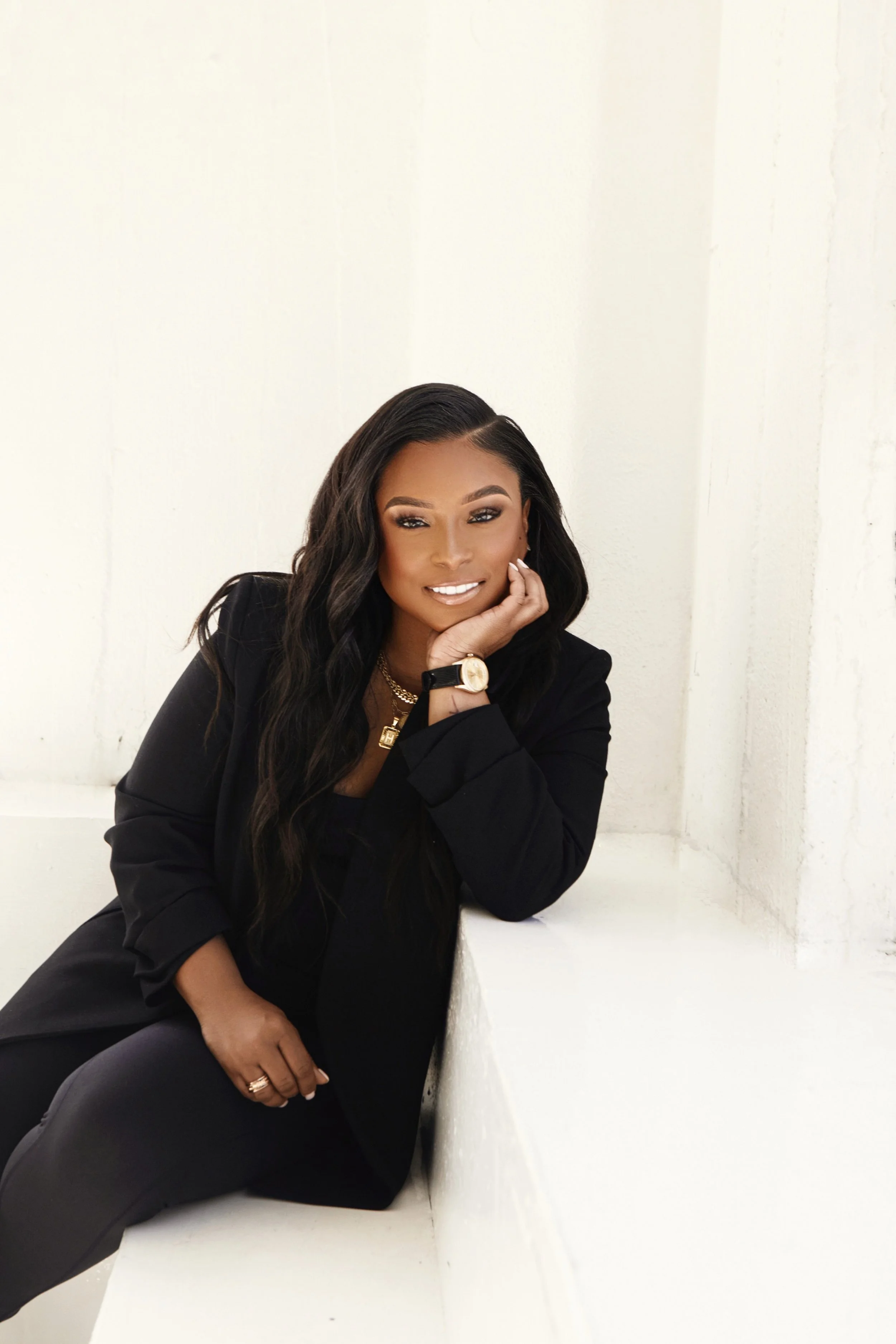
Minda Harts is a bestselling author, workplace consultant, award-winning filmmaker, and sought-after keynote speaker who helps organizations turn trust into their greatest competitive advantage. Through her Seven Trust Languages® framework, she equips leaders and teams with actionable strategies to build high-trust, high-performance workplaces.
Minda is the author of The Memo, Right Within, and You Are More Than Magic. Her new book, Talk to Me Nice: The Seven Trust Languages for a Better Workplace, will redefine how organizations harness trust as a measurable asset.
Her storytelling extends beyond the page—Minda served as Executive Producer for The Memo and wrote, directed, and produced The Distance Between, which won Best Short Film. Both projects explore themes of resilience and human connection.
Recognized as LinkedIn’s #1 Top Voice in the Workplace and one of Business Insider’s 100 People Transforming Business, Minda has been trusted by companies like Nike, Google, Best Buy, JPMorgan Chase, and the United Nations to help redefine leadership and workplace culture. She is also an assistant professor at NYU and the founder of The Memo LLC.