Season 2, Episode 1: Inside the Nonprofit Death Spiral with Ariel Glassman Barwick
How unrealistic growth goals, broken boards, and fundraising pressure are burning out good people.
A systems-level look at why “do more with less” is collapsing nonprofit leadership—and what sustainable organizations do instead.
Summary
What happens when passion-driven missions collide with unrealistic growth goals, broken governance, and chronic underfunding? In this episode of Hard at Work, I’m joined by nonprofit strategist and systems thinker Ariel Glassman Barwick for a powerful, honest conversation about what she calls the nonprofit death spiral—the cycle of overextension, undercapitalization, burnout, turnover, and declining impact that’s quietly unraveling organizations across the sector. We unpack how aggressive revenue targets, pressure to “do more with less,” and misaligned board dynamics create downstream harm for staff, fundraisers, and the communities nonprofits exist to serve.
We take a deep dive into fundraising burnout, moral injury, and governance failures, including why development roles are some of the most misunderstood and overloaded jobs in the nonprofit world. Ariel breaks down the constant “whiplash” fundraisers experience as they juggle wildly different skill sets, shifting expectations, and impossible goals—often without adequate training, staffing, or protection from inappropriate donor behavior. We explore how outdated donor-centric models, lack of management training, and inequitable power structures create ethical stress that drives talented professionals out of the sector altogether.
This conversation is also a roadmap forward. We talk about community-centered fundraising, human-centered leadership, contraction as a strategic choice (not a failure), and the real skills nonprofit leaders need right now—including patience, systems thinking, and the ability to truly receive feedback from their teams. If you’re an executive director, fundraiser, board member, or nonprofit professional feeling the strain of an unsustainable system, this episode will help you name what’s actually happening—and imagine what a healthier, more resilient nonprofit future could look like.
Show Notes
Find Ariel on the Common Great website and LinkedIn.
Vu Le's book, Reimagining Nonprofits and Philanthropy: Unlocking the Full Potential of a Vital and Complex Sector
Dorothy A. Johnson Center for Philanthropy study
Takeaways
Nonprofits often set unrealistic revenue and growth targets, creating a cycle of stress, turnover, and reduced impact—what Ariel calls the "nonprofit death spiral."
Many boards lack the expertise to guide nonprofit strategy, placing the burden of education and alignment unfairly on already overextended EDs.
Burnout in fundraising is worsened by constant context-switching, unrealistic goals, and exposure to moral injury from power dynamics with donors.
Leaders need to be holistic thinkers who can listen to their teams, not just drivers of growth. Operating at 85% is strategic, not lazy.
Fractional consultants and new governance models can help shift nonprofits toward sustainability—if leaders are willing to rethink the way things have always been done.
Notable Quotes
"We're drowning under unrealistic expectations—from our workplaces, our boards, and ourselves."
"The nonprofit death spiral starts with wishful budgeting and ends with burnout and collapse."
"Being a good leader isn't about doing it all—it's about listening, seeing the system, and choosing sustainability over speed."
"Fundraisers are asked to swallow their values for the sake of money—and that's moral injury."
"Operating at 100% all the time isn't noble. It's how the whole sector burns out."
Chapters
00:01 — Welcome + Introducing Ariel
04:30 — The Core Mistake Nonprofits Keep Making
05:50 — The Nonprofit Death Spiral Explained
11:15 — Board Dynamics + Capacity Problems
15:30 — Community-Centered Fundraising + Power Shifts
21:40 — Operating at 85% + Why That Matters
26:30 — Why Fundraising Roles Are So Burnout-Prone
32:15 — Structural Issues + Moral Injury
41:45 — The Training Gap for Nonprofit Leaders
47:20 — Consultants, Contractors + The Shift in Talent
53:00 — Rethinking Leadership + Nonprofit Perfectionism
59:00 — Nonprofits the Musical + Closing
Keywords: burnout in nonprofits, nonprofit leadership, nonprofit fundraising burnout, nonprofit governance, community-centric fundraising, moral injury at work, nonprofit death spiral, nonprofit executive director support, leadership coaching for EDs, sustainable fundraising strategy, toxic workplace culture, capacity building in nonprofits, nonprofit staff burnout, managing nonprofit boards, nonprofit sector challenges
Transcript
Ellen Whitlock Baker (01:04.665)
Hello everyone and welcome back to a new episode of the Hard at Work podcast. I'm your host, Ellen Whitlock Baker and I am joined today by my guest, the amazing Ariel Glassman Barwick. Hi Ariel.
Ariel Glassman (01:23.8)
Hi, Ellen. Thank you so much for having me.
Ellen Whitlock Baker (01:26.467)
Thank you so much for being here. It is delightful. We have sort of run in the same circles for many, many years, but just recently kind of got together and started talking. you're amazing. And I can't wait to hear all of your insights from working with nonprofits and fundraisers for 20 plus years. You know so much and you have such great ideas. But first, we've heard your bio, but what do you want us to know? Do you want to tell us a little bit about yourself beyond your bio?
Ariel Glassman (01:54.954)
Yeah. so let's see, there's, there's, there's, sort of fun stuff, you know, pick your personality methodology. I'm a Capricorn, but I'm sad, so I'm like kind of a wacky Capricorn. I'm an ENFP. You're Meyers-Briggs person. So I really like frontally lead with my values and really don't know any other way to function. if you know the disc assessment, I'm high I, high D, low S, low C. So very much like an inspirational driver, less with the whole compliance.
I'm a singer, I'm from a family of singers. In college, I was an a capella nerd. Go Stanford Harmonics. If you'd seen that, you say it's perfect? Like that was my life for four years. But I actually feel like I developed a lot of my early leadership and collaboration skills and instincts from like being part of that kind of self-directed performing arts group. Yeah. I'm a cat step mom, converted from a dog lover. Cat's name is Mouth, she's 14.
Ellen Whitlock Baker (02:31.543)
Hahaha!
Ellen Whitlock Baker (02:35.35)
Amazing.
Ellen Whitlock Baker (02:45.367)
I love that.
Ariel Glassman (02:53.048)
She's only six pounds. She's little bobtail. She's adorable. life. My favorite color is purple. Always has been, always will be. Like even our corporate brand colors are purple. And I think as I age, my husband's number one concern is like how he will stave off my inevitable attempts to turn the entire house purple. He will not be able to do that. And, you you heard my basic bio, but I think the most important thing is I'm sort of a nonprofit or social profit sector lifer from day one of my career.
Ellen Whitlock Baker (02:55.001)
Aww.
Ariel Glassman (03:22.75)
I don't wander into this by accident. It is what I have always done. It is what I will always do. And, you know, I think I've spent my life in a sector where things like burnout that are so much more relevant for for-profit industries and sectors than they used to be. We've just been expected to deal with it for decades. And so it's been fascinating to watch other industries kind of go through a lot of the challenges that our sector has gone through for years because of under resourcing and hopefully, you know, I just, I hope.
There are people who can get a lot out of the wisdom I can share from having been in an industry that's been going through these phenomena for so long and maybe bring some advice for coping and dealing.
Ellen Whitlock Baker (04:01.334)
Yeah, and I think that your role, especially as a consultant in that sector for a long time, you've worked with so many different kinds of nonprofits, different kinds of fundraising. You've seen fundraising evolve over the last 20 years. So I think I was really excited to get your perspective because of that, because we still are working with people like me who worked in the same place for 10, 15 years, and it's harder to see trends when you're inside and it's much easier when you're outside.
just diving into that as you've gone into the inner workings of these nonprofits and fundraising shops that you're working with, what are some mistakes that you see come up over and over and over again?
Ariel Glassman (04:47.416)
So I think, I mean, there's sort of a complex sort of connected series of downstream things that happen from what I consider to be sort of the greatest upstream mistake that any nonprofit could make. And I'm not one of those people who thinks that all nonprofits are alike. Like I've worked with hundreds of organizations, some all volunteer led, some having staff, 200 people employed with them. But all of them are prone to one really
understandable, but also destructive mistake, which is I think that in many ways, nonprofit organizations for a lot of reasons that a lot of the other folks you've had on your podcast from our space have talked about, you know, we suffer from extraordinary pressure to do the most, be the most, be everything to everyone. If you're not pressing the gas pedal 100 % at all times, then you're not worth funding. There's a lot of reasons.
Ellen Whitlock Baker (05:40.578)
Yep.
Ariel Glassman (05:43.178)
that go into that being the reality of our sector, but it is, and what it does is it means that we make bad choices about our organizational strategy that put us in great peril. So what I like to talk about is what I call the nonprofit death spiral. once you kind of understand it, you can easily see how this sort of original sin at the top of it is basically the fundamental.
Ellen Whitlock Baker (05:52.088)
Mm-hmm. Mm-hmm.
Ariel Glassman (06:07.15)
know, factor that we see burning out most people who are working in nonprofits, especially people in fundraising professions. You know, so the idea is, is that great, we all want to be doing the most, right? We see there's need out there and somebody's got to meet it, right? So we do things like put in budgets that have $300,000 of revenue in it that no one knows where it's going to come from. But we're making a wish and a hope that it'll come from somewhere.
Ellen Whitlock Baker (06:32.895)
Mm-hmm. Mm-hmm.
Ariel Glassman (06:33.742)
Right? And so we get into a position where these organizations are undercapitalized against their goals, which creates extraordinary stress inside the organization. And that stress can lead to turnover, staff instability, right? And then all of a sudden you have instability of impact because your staff are wiggly, right? And then once your impact starts flailing, community support decreases.
Ellen Whitlock Baker (06:41.782)
Yeah.
Ariel Glassman (06:58.23)
Right. And so can see how that's a, like a vicious circle and you you lather rinse and repeat and that decreased community support leads to even worse under capitalization to more stress, more turnover, less impact, less donor support until the whole bottom falls out. so maybe the image, the original mistake here is like inappropriate revenue targets and growth goals that are too aggressive. That's the original sin. I mean, this is actually an organizational strategy problem, which is actually a leadership problem.
Ellen Whitlock Baker (07:24.886)
Yeah, I love that because it comes back to a lot of what we talk about on this podcast, which is we can give you all the advice on how to do great marketing and how to do great fundraising and how to do a capital campaign and all that. And yes, you need that too, because you do a lot of that. But when your whole system is broken or you don't have the kind of leadership muscles that you need to flex in order to avoid that death spiral,
It's like, it's not no matter what, it's not going to work in the same way as if you've, you know, kind of I've been reading Brene Brown's new book and she sort of, she tells this story at the beginning of her personal trainer telling her she had to like really work on her core before she could do anything else. And she was kind of pissed off about it because she's like, whatever, I want to lift weights. But it's so, you know, she makes the metaphor of like we in in businesses have to do the same thing. And I feel like
What you were saying is so right. We neglect that in nonprofits in particular. What do you think are some of the reasons why?
Ariel Glassman (08:32.05)
Well, think the tendency to overextend ourselves comes from a really wonderful place. Again, nobody's in the nonprofit sector because we think we're going to get rich. We're in here because we see a way to be a helper. All of us are driven by the desire to make the world better, like duh. But I think when you pair that with
Ellen Whitlock Baker (08:40.492)
Yeah.
Ariel Glassman (08:56.544)
sort of like a sector that is expected to have absolutely no boundaries. It is so easy for us to get way out over our skis and be overextended. And it's become so common that it feels like the norm and actually having sort of a normal work pace and a normal balance. That doesn't feel normal. That feels like we've flown through the windshield and broken it and we're lying on the road in front of it in a heap surrounded by glass going, what happened? I actually get to rest? I think we've from this beautiful place of seeing
Ellen Whitlock Baker (09:18.646)
Yeah.
Ariel Glassman (09:25.102)
things that need solving and realizing that no one's gonna solve it if you don't, which isn't necessarily entirely true, but it's a wonderful instinct. But I think when it's paired with lack of boundaries or lack of experience, understanding what good guardrails look like on our innovation strategy, I think that's when it's really easy for it to turn into this thing that really harms us.
Ellen Whitlock Baker (09:37.142)
Yes.
Ellen Whitlock Baker (09:44.056)
What are those guardrails? How can leaders start putting those into place or start thinking about that?
Ariel Glassman (09:53.262)
So I think that part of it is it's going to be discipline in the face of enormous pressure because, I, okay, I'm, run a consulting company now I'm in for-profit clients and nonprofits. So have a lot of experience kind of sorting through.
Ellen Whitlock Baker (10:02.466)
Yeah.
Ariel Glassman (10:11.82)
the differences in incentives and pressures that govern how nonprofits make their decisions versus for-profit decisions. And I think one of the hardest things about being a nonprofit life is that it's structured in a way that we can't make decisions very fast and we can't make them very independently. And there are good things and bad things. There's a whole other podcast in here about how nonprofit governance structures need to be fixed and modernized.
Ellen Whitlock Baker (10:28.0)
Yeah.
Ariel Glassman (10:34.978)
But I think that, you know, when you're an executive director and you've got a board who gets to approve your strategy or influence or push back or whatnot. And the problem is, is that those people don't always understand necessarily.
Ellen Whitlock Baker (10:41.43)
Mm-hmm.
Ariel Glassman (10:51.564)
the real strategy for a nonprofit for how you actually create a working organization, how you manage and sustain all the factors that make an organization sustainable. So the decision-making environment is filled with people who are good-hearted, but maybe really don't actually have the skills or perspectives needed to make good decisions that really respect everything that's happening in the ecosystem. And a lot of executive directors don't feel like they have the ability to push back.
Ellen Whitlock Baker (11:10.423)
Yeah.
Ariel Glassman (11:20.46)
So there's a weird structural factor here where there's a lot of cooks in the kitchen for nonprofits, some of whom know what they're doing and some of whom don't. And everybody has great intentions, but when you've got miscalibrated structures like that, it leads to bad decision-making as an organization and typically leads to really inappropriate growth goals.
Ellen Whitlock Baker (11:38.721)
Yes. It's really such an interesting model because if you think about a for-profit, now I don't know anything about how a for-profit board works, so I might be over my skis here, but in the for-profit sector, you're often hiring someone who has a very specific skill set and you depend on them to be the expert in that area. And in nonprofits, we may or may not do that, but
That skillset doesn't seem to be respected in quite the same way by the board. Again, fabulous intentions, but there's, I've always felt this sort of like, well, I work at Amazon, so I know a lot more than you do working in this nonprofit. And let me tell you how I think you should engage alumni or whatever. Again, great intentions, sometimes fabulous ideas, but a lack of understanding of how the structure and the systems actually work.
I was talking to Voulet earlier this season, and he had come up with a bunch of different kinds of structures for governance in his amazing book, which I'll link to in the show notes. What do you see out there as like, do you see anyone doing this really well? Or do you see models where executive directors are able to educate their boards?
to have the knowledge that they need in order to make more informed suggestions.
Ariel Glassman (13:06.83)
Well, here's the thing, it's not necessarily rocket science, but the truth is, we're basically asking an executive director who's already probably leading, managing everything to also then take on the task of saying, as part of your job getting this mission done, you also have to educate this other group of people about that mission, about how that mission is implemented, and also bring them into the resource development for it, which most of them are filled with misunderstandings about, wrong assumptions about.
Ellen Whitlock Baker (13:33.965)
Yeah.
Ariel Glassman (13:36.362)
So it's most of the time, it's a capacity thing. It's that the executive director who is positioned to lead the board through those, those pieces of knowledge and those understandings and through governance structures that help manifest the outcomes you all want to see, you don't have time for that. Like, it's just another thing on a long list of stuff that is already, you're never going to get to half of it. And I think it's, it's open. And, but the truth is, is there is a lot in our typical structures that are inherently inequitable and do need to be fixed, but also it's not just that.
There's a fundamental capacity issue where the expectation that the ED has to be responsible for the board's experience and fully bringing their experience into the organization and conducting the learnings of the organization back up to them and having all those things meet in the middle to create something sustainable is extremely.
Ellen Whitlock Baker (14:26.41)
It's so difficult. And we talk a lot about capacity and how particularly funders and donors don't love to fund capacity or just in general, like operations dollars so that we can have enough staff to do our work, have the tools we need to do our work, et cetera. Do you see that as well? what changes are you... Like, is anybody figuring that out of how to work with donors?
so that they can actually get the support they need to do the work.
Ariel Glassman (15:00.366)
I mean, yes, definitely. The community-centric fundraising movement, I think, is a great example of the first time our sector has come together to try to define a connected set of principles that lead us all in that direction. So there's definitely models out there that are teaching us how we move out of donor-centricity into shared-centricity, like we're all on a team together where the donors aren't centered and they're not the heroes. But we are saying, we're an opportunity for you to have agency about a thing you care about.
those models are emerging for sure. I think what's interesting about it is that the change is very slow. Like it's not overnight. We're actually just now getting the first studies that show that a community centered approach will not like drain your revenue and chase your donors away. If you're not just kissing their butts all the time. Right. there's
Ellen Whitlock Baker (15:36.308)
It is, yeah.
Ariel Glassman (15:48.43)
study came out in February from the Dorothy Johnson Center for Philanthropy that really looked at that rigorously. And I was so, so delighted to see it. Cause right now nobody believes that if you're community centered, you'll actually raise the money you need, but you can, and we're starting to see that. So just wanted to name that if folks aren't familiar with CCF, which is what we call it, or haven't read that study, it's an awesome time to do it and think about how you might.
how you can sort of start edging your organization towards those. But that's the key thing is that it's happening in such slow motion that nobody's really seeing it sort of land firmly in that space. And I think that's part of the challenge for sure.
Ellen Whitlock Baker (16:17.751)
Yeah.
Ellen Whitlock Baker (16:25.846)
I totally agree and we'll link to that study, which I actually haven't read. So I'm excited to see it because there's a parallel there to just human centric workplace management in general, which is there's a lag in reporting on how workplaces that whether they're private, public, nonprofit, whatever, where they have taken that more human centric approach, which is similar to a community centric approach and philanthropy.
how that has changed their bottom line. And we know everybody's more efficient, you have less turnover, but you have to take that pause to evaluate and change those systems. Adapt, maybe better word. What do you think, like if you're in a ED listening to this and you're like, yeah, that sounds amazing, how do I take that pause?
What are some ways that you either you've seen or that you would suggest a leader in a nonprofit or anywhere to say, hey, we got to slow down a little bit because we need to work on the structure?
Ariel Glassman (17:37.23)
Yeah. The truth is I have no perfect answer this because it's something that actually my team, especially right now, he's constantly saying to our clients, but every single one of them has 800 reasons why it's impossible to slow down or take a beat or take a pause. like I'm in my head, I'm sort of sifting through the many, different reasons that have been shared with me about why an ED or a leader feels like they can't do that. I think there's a variety. There's a variety. It's certainly not a monolith.
Ellen Whitlock Baker (17:44.874)
Yeah. Why?
Mm-hmm.
Ariel Glassman (18:04.95)
In terms of how you get to do it, part of it is connected to the organizational strategy decisions. Because what happens in a moment like this, when the economy is tough, which means a lot of things and people out there are suffering, which means the need is greater than ever. But also, it means it is harder for us on the nonprofit side to do our work and pay for our work than ever before. So you get stuck in this sort of cycle where the need is huge and it keeps getting bigger. And so your incentive and all of your inner motivation says, go, go, go, go, go. And it is the most
counterintuitive thing in the world to say, time out, pump the brakes. And so I think that
Basically, the conversations that I've had with people in that position, they amount to a conversation that goes like this. We have to leave it all on the dance floor for our missions, or we don't deserve to be in our roles, or we have to be going at 100 % or donors won't see that value. And my answer to that is, cool, cool, cool, but do you actually want to be here and functional in five years? Or are you okay with the fact that in two years, you're going to be a smoking pile of human ash on the floor and your org will have to it?
Ellen Whitlock Baker (18:55.341)
Yeah.
Ariel Glassman (19:12.014)
Like sometimes the only, I actually really like when I encounter an eating that session to take them through that nonprofit debt spiral that I talked about at the top of it, because a lot of them, especially first time EDs, they are not in a position to really perceive the downstream implications of those upstream choices they make about what is our organization doing? How much does it cost and can we afford that? No. Okay. I'm going to do it anyway. Right. We've been through that before. It's really not.
Ellen Whitlock Baker (19:20.279)
Yeah.
Ariel Glassman (19:41.194)
necessarily obvious that that's what's going to happen. But from my perspective, when I've seen it happen or sort of people, organizations approach the brink and then come back, bear it by the, you know, by the hair of their chinny, chin, chins time and time again, it's a pattern that I see extremely clearly. So sometimes I will investigate and kind of make sure I understand where they're coming from in their leadership experience. And especially if they're a new ED, trying to start exploring these patterns and sharing real life examples, which I unfortunately have many of to say.
Ellen Whitlock Baker (20:07.842)
Yeah.
Ariel Glassman (20:08.462)
this is how this played out. And this is why I want you to think about this thing differently, because that's the, and you know, obviously this is really showing, think something that I do think is really characteristic to my approach, which is that I'm a systems thinker, right? I'm looking for, I'm a diagnostic, I'm looking for disease that is creating the downstream symptom. And so I kind of work with them at,
Ellen Whitlock Baker (20:12.461)
Yeah.
Ellen Whitlock Baker (20:21.078)
Yeah, which is needed. Yeah.
Ariel Glassman (20:32.182)
work with them on how to see what is upstream and what is downstream and how to connect the dots. And that's, it's not a one hour conversation, right? And the first five times this comes up, all I hear is my board won't let me do that. My staff would be mad if we pulled back. There is no, there's, it's probably one of the hardest decisions any ED has to make, but I think there are a lot of organizations who need to find the way to corral the internal and board level will to take a collective deep breath together.
Ellen Whitlock Baker (21:00.812)
Yeah, I agree.
Ariel Glassman (21:01.582)
And in like smart leaders right now are choosing to operate at 85 % and leave space for unpredictability and sort of just like wiggle room for organizational resilience. Cause I think the chronic thing here is we're all, the whole sector operates on a knife's edge of 1 % wiggle room and right. And for-profit businesses, we look at that and we think that's crazy, right? Like how could you be operating on such a knife edge all the time? And it's one of those things where,
I do think this is one of those ways in which nonprofits could take a lesson from the for-profit sector, which is that understanding that if you don't have a certain amount of wiggle room, your plan's not solid. Like a will break instead of flexing is not a whole system. So it's like, you have no choice other than to sort of cut the knife through the cycle and say, we are stopping this and it's going to have pain. We need to do this in a way where we get to choose what pain it is and what we are sacrificing for this stop. And maybe it's our sense.
Ellen Whitlock Baker (21:39.607)
Yes.
Yeah.
Ariel Glassman (21:58.636)
that we are putting in our best effort. But that sense of putting in our best effort equals 100 % go, go, go, press the accelerator gas pedal is absolutely crashing the sector out.
Ellen Whitlock Baker (22:09.684)
It totally is, it totally is. if, mean, there's so much there because there's so much related to like the white supremacy culture and perfectionism and the feeling that we have to fix things and, you know, doing what it takes to get things done is the way to go. And that's noble as opposed to, hey, I don't actually want to burn myself out. Like that's no good. And I think what you said about,
how in the private sector, looking at that, how we actually operate with what little return and what little even just internal support we have with enough staff, with enough resources to do the work we do. It is just bananas that we do it. And nonprofit doesn't have to mean
no money, you know? It just means that the goal is not to make profit, the goal is to help a community or whatever, but it doesn't mean you have to have no money in the bank, right? And it's this misnomer.
Ariel Glassman (23:13.902)
Yeah. No margin, no mission is what I like to say. And it's funny, there's a whole other podcast out there that I've been on that where we spent the whole episode talking about why it's mostly BS, the idea that like nonprofits should behave like a business. But this is actually one of the ways that I think that is a valid critique of our sector. We have great ideas. We get inspired. We start an organization when we don't probably have experience managing or sustaining an organization.
Ellen Whitlock Baker (23:16.886)
Ooh, I like that.
Ellen Whitlock Baker (23:41.08)
Yep.
Ariel Glassman (23:43.252)
And, and passion and inspiration has about a two to three year runway where like you can, you can maintain a new nascent growing thing on passion and inspiration for a couple of years. But in year three, it's like, if you don't have a model for impact that has a model for revenue that is highly attuned to your impact model and that creates an impact equipment that shows who you are to the community. that individual donors for fund you like at a certain point, you have to have those fundamental structures and models that make sense.
Ellen Whitlock Baker (23:47.628)
Mm-hmm.
Ariel Glassman (24:10.986)
Even for nonprofits, when we have this option of just going out and trying to say, hey, you believe in our cause, give us money, and it's not necessarily an earned income thing.
Ellen Whitlock Baker (24:19.288)
Yeah, yeah, it really is a unicorn job, the ED in particular, because you're doing everything from cleaning the bathrooms to asking somebody for $100 million gift sometimes, having never fundraised before. What do you think?
are emerging and you've sort of mentioned some of them along the way, but like, let's put a list together. What are the emerging most important skills that leaders in the nonprofit sector need to have in order to succeed?
Ariel Glassman (24:56.878)
So one of them, think, is holistic perspective. Can you see from your team's perspective? Because the leader who's inclined to press the gas pedal on growth when the revenue environment is saying, ugh, I don't know if that's going to work, are you able to hear it when your team says, from my perspective, this is how it's going to affect me? I think we see a lot of CEO roles as like, you're the driver. You're in charge. You're drive, drive, drive. I actually think one of the most important skills is knowing how to receive other people's truths.
Ellen Whitlock Baker (25:01.42)
Yeah. yes.
Ellen Whitlock Baker (25:17.194)
Thank
Ariel Glassman (25:26.414)
which sounds very woo woo, but the people who get elevated to these C-suite leadership positions, they're generally, it's happening because they know how to get shit done. But in an environment like this, getting shit done is not, that's no longer the acceptable minimum baseline that you just need to have. So I think if you have a tough time seeing yourself in other people's shoes or you believe the power dynamics in your organization should flow only one way, you are gonna have a hard time right now.
Ellen Whitlock Baker (25:26.689)
Yes.
Ellen Whitlock Baker (25:36.385)
Yeah.
Ellen Whitlock Baker (25:44.12)
Absolutely.
Ariel Glassman (25:56.576)
And I think patience, right? Like this kind of relates to my obsession with, you know, helping nonprofits avoid that death spiral. But this is not the time for aggressive growth. Nobody wants to hear that right now, but I have never seen a worse revenue environment for somebody saying, and I want my organization to do and be more, which again, here's all of us when we know that the need is never bigger than ever. But right now, patience and discipline to protect.
Ellen Whitlock Baker (26:15.507)
Yeah.
Ellen Whitlock Baker (26:23.864)
Hmm.
Ariel Glassman (26:24.814)
and the core impact that you make, not get distracted by shiny objects or like try something unproven for which you have no existing funding stream. Like this is not the time. Nobody wants to do that. But if you want to be here and thriving in five years, right now you're figuring out how do I go into mode that protects us all while protecting the reason that we exist. And a lot of our agents have to become comfortable
Ellen Whitlock Baker (26:45.92)
Mm-hmm.
Yeah, that's the bit.
Ariel Glassman (26:52.534)
with contraction, which they are told is the thing to be avoided at all costs. And that means that you have failed. And I think we're approaching a really uncomfortable moment where things that we typically consider failure are what we are going to have to do to make it through. And if you can't see that right now as an ED, you need to open your eyes to it. It sounds harsh, but it's these.
Ellen Whitlock Baker (27:06.764)
Yep. Yeah.
Ellen Whitlock Baker (27:13.431)
Yeah.
Ariel Glassman (27:17.42)
These things, these patterns that keep us in these behaviors are so enmeshed that sometimes you have to be really blunt and direct to get someone to hear it.
Ellen Whitlock Baker (27:24.502)
Yeah, and the downstream effects are piling up right now. We've got horrible job retention rates in all sectors, but the nonprofit sector is looking really bad. We're going to talk about fundraising in specific in a minute, but we know that the average length of somebody to keep a fundraising position right now is 15 months, which isn't even, you don't even return on your investment of hiring that person in less than two years. So,
It's like there's some weird disconnect between we have all this data that shows us that the downstream effects of these poor decisions at the leadership level are horrible and they're really hurting our sector, but yet we're still not making those changes at the leadership level. I'm just curious what your take is. I think I asked Foo the same question, but it's like, it's all there for us. Why aren't we making changes?
Ariel Glassman (28:27.598)
It's interesting. In some respects, the call is coming from inside the house, right? Like our whole sector kind of has Stockholm syndrome. Like we're forced to believe and forced to accept that we will just always have to operate in an environment where what we need to achieve our goals will not be there. And we're just muscling through in whatever way that we can. that, the origin of that is not our fault, but we have never figured out a way as a sector to find the, the sector level intervention.
Ellen Whitlock Baker (28:48.492)
Yeah.
Ariel Glassman (28:57.642)
that can stop that cycle and keep it from starting in new organizations. And a lot of that has to do with what I'm sure you talked about with Vu on your podcast with him, which I'm sure has a lot to do with how funders fund. We all know what the impact of having a deep devotion to only providing highly restricted funding does to our sector. I think there's a of that going around for sure.
Ellen Whitlock Baker (28:59.447)
Yeah.
Ellen Whitlock Baker (29:23.024)
For sure, yeah. And when, well, let's get into fundraising because I know a lot of you who are listening are fundraisers or who live in a fundraising world of some kind. Even if you're not.
Ariel Glassman (29:34.358)
And even if you're not a fundraiser into this, I want you to know what I'm about to say even more than fundraisers because I think a lot of the times, misunderstandings about what the work is and what it really needs to succeed are often also in the way and become a burnout factor. So I hope you're hearing us talk about fundraising.
Ellen Whitlock Baker (29:41.463)
Yeah.
Ellen Whitlock Baker (29:49.579)
a huge burnout factor. Let's talk about it because, so, you we know the burnout percentage for nonprofits is high. It's very high for fundraisers. What's going on?
Ariel Glassman (30:02.999)
So I mean, number one is that revenue thing, right? Like the difference between a goal that is reasonable and a goal that is unreasonable and how that pressure lands, there's no question about it. That's the biggest one. But there's a lot more nuance there too. So for one thing, fundraising is an extremely varied discipline, right? You hear fundraising, but you know what's in that? Data wizardry.
technical writing, persuasive writing, analytical marketing, being a social media expert, being a relational fundraiser, being a prospect research, being an event planner. And if you're one person shop like that, you are doing all of those things. it's, yeah, I'm not giving enough love to the plan giving people.
Ellen Whitlock Baker (30:37.354)
Gift planning, add gift planning into that.
Yeah, I mean, which is such a, it's a discipline in itself and for a lot of people, it's like one of 87 things they do in their job.
Ariel Glassman (30:50.57)
Exactly. Right. Or even like just being in fundraising, that means many, different things. So it's like, you're sitting here and you are going through what I call whiplash constantly, which is like you're switching modes. You are flitting between these various activities that require really different skills, really different sets of expertise all the time. and basically you're just getting kind of jerked around on a string by that experience inside a fundraising job. And there's sort of a productivity and emotional load that comes with that constant context switching.
Ellen Whitlock Baker (30:54.455)
Yeah.
Ariel Glassman (31:20.172)
I call it whiplash. And it's sort of like, just creates this over time and entropic drain of energy out of the system. You're pinging back and forth between so many different things, things that are different, but also things that are like strategy versus implementation, which is a different kind of mode switching. The smaller your team is, the more likely you are to be exposed to this whiplash. And it just basically drains energy and productivity out of the whole system that you never can get back. And that's one thing.
Ellen Whitlock Baker (31:21.463)
Yeah.
Ellen Whitlock Baker (31:45.997)
Yeah.
Ariel Glassman (31:48.462)
I also think that it is, it's a very misunderstood profession. There's a lot, it's a profession that is changing in real time in front of our eyes. When I started fundraising, you know, it was the whole traditional like major donors rule, your job is to kiss rich people's hiney and make them give you this money because of social reasons or quid pro quo. like the really traditional model that rubs so many of us the wrong way and frankly, it causes like moral injury to many of us.
Ellen Whitlock Baker (32:14.989)
Yeah.
Ariel Glassman (32:17.472)
It is changing to this thing that is going to have a more ethical and equitable approach in the future. And we're in the middle of that right now, but fundamentally it's really misunderstood. Part of it being misunderstood is the radical shift we're going through that is sort of happening in slow motion, but it's also just understood misunderstood overall. And the problem is that it's inside our organizations. We position non-experts to have inappropriate input and influence over fundraising. is most EDs and board members like have no idea.
actually works in fundraising. They are the overseers of it and there are committees formed around it who are invited into strategy development and they have no business being part of it. like, so the misunderstanding here of what it is and what works and who should be driving, I think it hits fundraisers a lot more than like programs, right? Most of the board members would never be like, I'm a programs person. I am an expert in this topic. I have a valid opinion about this, but everybody feels like they get to have a valid opinion about fundraising and we reward that.
Ellen Whitlock Baker (32:48.564)
Yeah.
Ariel Glassman (33:16.928)
And we create structures that like bake it in and it creates, I think a lot of tension. mean, this, this leads to like two of my like constant refrains, like Hills that I want to die on, which is that like development committees are mostly BS and most orgs are better off without that. No, I'm not even kidding. Like great have a stewardship committee for thanking donors, planning committee, not a problem, but like development committees are a huge waste of time. And actually trying to figure out how to make one work when you're trying to shove a square peg in a round hole.
Ellen Whitlock Baker (33:35.948)
I hear ya.
Ariel Glassman (33:46.957)
is absolutely a burnout factor for fundraisers. That's a way governance structures are not neutral and they contribute to burnout, right? Cause it's like, you're getting, everyone knows, well, you have to have a development committee. Why? That's how we've always done it. The amount of time we spend chasing that tail internally to make the board feel like they should be more part of this than they should be. They have a role to play. It's usually not, they're not inserted in the right place.
Ellen Whitlock Baker (33:49.336)
Yeah, yep.
Ellen Whitlock Baker (34:10.573)
Yeah.
Ariel Glassman (34:11.122)
Second bear that that leads to for me is that the nonprofit sector would be a lot better off if more development directors became executive directors because you mostly through the program side because they're the experts in that thing. But you know, we have an organization that we're about to start working with who their executive director used to be their development director for a long time. And she has achieved incredible stability, incredible success in a down and unstable year.
Ariel Glassman (34:37.122)
You know, here we are, it's December 5th. She hit her year-long fundraising goal in October. They're just raising money, right? And she, because she understands how the decision she makes in her executive role, roll downstream to affect all the things that make fundraising harder or not. And so it's just like, I truly, truly believe that. And I think that EDs not understanding it is a big problem. And therefore we need to educate the EDs who are not fundraisers. And we also need to accept that people coming up on the fundraising side,
Ellen Whitlock Baker (34:41.973)
Wow.
Ellen Whitlock Baker (34:51.626)
Mm-hmm.
Ariel Glassman (35:06.54)
are as valid a choice as people who came up and, know, I ran the program, so now I'm gonna be the ED. Programs work is not what being an ED is about. And I think there's just so many like structure related to the purpose of the role issues that create so much friction inside small nonprofits in particular. And I think they land heaviest on fundraising for a lot of reasons. You heard me mention like moral injury before too, and I think that's...
Ellen Whitlock Baker (35:30.774)
Mm-hmm.
Yeah, I want to talk about that. Tell me more.
Ariel Glassman (35:36.761)
So like, this is one of those ones where part of it is about your personal perspective and the values and morals you walk in with. I know a lot of major gifts fundraisers who started working 30 years ago who see no issue with the way they've been working with major donors for 30 years. And that's fine. But for folks like me who are coming in from a slightly different perspective, like we are in, there's no question, we are in power dynamics with our donors and funders. And in many ways they hold the purse strings.
and they wield them less or more appropriately depending on the nature of the funder or the donor. And having to be in community with people who are trying to leverage or squeeze their donation to get something for themselves, whether it's social positioning, whether it's their logo on a thing, that actually does real harm to people sitting in the fundraising chair trying to negotiate those deals because it is not necessarily a good faith, sort of equal footing proposition. And so we are constantly in these situations where we're
we're having to deal with the motivations that are not aligned with ours and that are not actually representative of somebody being on a team together, trying to solve a problem together. And fundraisers are told to just shut up and deal with it. Or worse, take that sexual harassment at lunch you got when you met with that donor last time. It was a lot of money, right? We are, as the revenue drivers, we are more positioned to be morally injured by the work than anybody else.
Ellen Whitlock Baker (36:49.762)
Mm-hmm.
Ariel Glassman (37:00.61)
And that's something that we're just starting to come to terms with. And I think I would credit a lot to this community-centered fundraising movement for naming that in a really different way that I think is finally starting to penetrate people's consciousnesses in our sector.
Ellen Whitlock Baker (37:15.714)
Can you define moral injury just in case somebody doesn't quite know what that is?
Ariel Glassman (37:21.196)
Yeah, I mean, I'm certainly not like Socrates offering that kind of definite, but the idea that we may be forced to engage in behaviors that violate our own values and our own sense of ethics. You know, I honestly experienced a lot of moral injury as a fundraiser very early on. So I got started working in the Jewish community. And if folks aren't aware of this religious communities, they know how to fundraise. So I learned a lot getting
Ellen Whitlock Baker (37:24.138)
No, no, no, but just.
Ellen Whitlock Baker (37:31.724)
Yeah, yeah, yeah.
Ellen Whitlock Baker (37:47.007)
Mm-hmm. Mm-hmm.
Ariel Glassman (37:50.997)
getting experience, plug into sort of the social good side of the Jewish community. But I am not a Zionist. I have a lot of challenges and problems with the behavior of the state of Israel in many ways, and I have for a long time. And I experienced my first moral injury trying to fundraise in the Jewish community and having to
not feeling like I could really be a real partner in the conversations that we were having with donors who were very Zionist, very pro-Israel, like you were expected to toe the party line. And for me, I'm sitting here going in my head, going, I'm having a hard time understanding why these people can't see that they're funding apartheid. And I'm over here at this organization that is doing really good work, not related to Israel at all, but the community of donors is Jewish and the organizational leadership expect
Ellen Whitlock Baker (38:33.207)
Yeah.
Ariel Glassman (38:43.124)
All of those donors have the same opinions and they expect you to get in line with it. And I stopped working in that field, even though it aligned with me culturally and I was doing work that actually led to great outcomes that were not connected at all to the state of Israel, but because I was forced to be in community and not allowed to represent or have my real beliefs be even a thing that would be allowed to be expressed and that would be totally unwelcome. I just could not hold that after a certain time.
Ellen Whitlock Baker (39:11.882)
It's so hard and I'm gonna shout out the engagement community too, because this, I came from alumni engagement. It's not fundraising, but it's similar in that you're working with people in order to get volunteer hours or sponsorship of something or whatever. there are so many, I mean, I have.
a whole book of stories of times where I experienced moral injury, where my staff experienced moral injury, and it's still happening. And I think it's such an important topic and we'll get into it more, I'm sure, on the podcast later, but I'm really glad you brought it up because how do you even heal from that? A, that's one reason why people are leaving the profession, but B, once you leave, you have to have a whole healing process too.
complicated and not supported by your organization, you know.
Ariel Glassman (40:10.008)
Well, and here we come back to sort of the leadership and organizational decision-making being a huge part of all of this because the more stressed you are because you are far from your goal, even if that goal is inappropriate, the more pressure will be upon you to put yourselves in situations where you will experience moral injury to yourself. Right. So all related in that way.
Ellen Whitlock Baker (40:27.766)
Right, right. I'm loving the death spiral. Like I think that is the clearest example I have ever seen. Do you have like a visual? We need a visual. Someone needs to draw it for you.
Ariel Glassman (40:38.668)
you know, I don't, but I was thinking about that. can certainly, I think actually a visual of this would make it even more compelling because it's clear when you hear it, but then when you see it, yeah.
Ellen Whitlock Baker (40:51.742)
Yeah, I'm seeing it for whenever you write your book, Ariel, like it'll be, you know, figure three. No, but I think it's so important and you're naming these things that are, I mean, you have wisdom of being in so many different environments and because you're a systems thinker, which also not a lot of us are. So, you know, again, you become an expert because you love...
you know, working with kids or whatever it is. Like, you know, I worked at the Boys and Girls Club in my first job and it was amazing. That wouldn't have made me a better like leader or there was nothing that would have helped me prepare for a leadership role. And so I think part of it and part of what we talk about on here too is also the training inside of organizations, right? Because we don't have any.
Ariel Glassman (41:38.104)
Yes.
Ellen Whitlock Baker (41:43.169)
manager or leader training. When we do, we have external things, but they're also like Leadership Tomorrow or whatever, but you have to apply and not everybody gets in and it's not enough for everybody who needs it. So I don't know if you've seen or what you think about like, how can we get more training to the people who are becoming leaders?
Ariel Glassman (41:58.317)
Yeah.
Ariel Glassman (42:08.236)
Yeah, I mean, you're commenting on something that I have just felt in my bones for so long. Because the thing with the nonprofit sector is the lack of resources, it squeezes everything, right? So most organizations that we work with, they don't even have a professional development budget anymore. And there's no training for management and they can't institutionally take on the burden of creating a great manager. They just need somebody to step in and get it done, right? And so there's a lot of reasons why basically no one gets management training in the nonprofit sector. That's sector wide.
Ellen Whitlock Baker (42:13.324)
Yeah.
Ellen Whitlock Baker (42:23.831)
No.
Ariel Glassman (42:38.146)
But especially in fundraising, there's a really particular way the whole lack of training shows up. so great, let's say you're a great individual contributor. You're a major gifts officer. You raise a lot of money through major gifts. Your board's like, wow, you're going to be our next chief development officer. And you get promoted into that, but you've never managed before. And you don't know how to do what the rest of your team is doing. So you don't know how to do digital marketing. You're not an event planner. You're probably not a grant writer. And so when you haven't done those things,
Also, it becomes harder to manage someone else doing them to success. So we see folks who get great results from their, what like their lane of fundraising, which is often really different from the other ones. you get promoted, you have no training, and then you are just wandering around in the dark, having no idea how to be a good manager in any shape or form, much less manage the other disciplines that you're now in charge of to success. and I think this is true for EDs managing development directors, and it's also true for development directors managing their development staff.
Ellen Whitlock Baker (43:35.436)
Yep. Yep.
Ariel Glassman (43:35.573)
there's a reason why you see people really with like different personality types and different inclinations really specializing in fundraising to the degree that like there's like now like, I would say a type of fundraiser who's like, my goal is to be a development director. And they're not the people who are chasing a major gifts or grant writing job. They're the people who are chasing holistic sort of baseline understanding of all of it so that they can rise to the top level as a manager and be good at that.
and be good as a leader in fundraising. And I actually, think we need to recognize these patterns when we are thinking about management in nonprofits, because what I just described, great major gifts fundraiser becomes development director, crashes and burns because they can't do the rest and nobody has any budget to helping them figure it out. That is real. I have seen it over and over and over. And so, yeah.
Ellen Whitlock Baker (44:18.359)
Mm-hmm.
Ellen Whitlock Baker (44:24.714)
I can name it over and over again. Yeah.
Ariel Glassman (44:27.83)
And so again, that's chronic nonprofit sector-wide. There's no management training, because of the diversity of this field and that it is not a monolith in a way that is not visible to anybody who's not actually in it already, I think it extra shows up in fundraising.
Ellen Whitlock Baker (44:43.126)
Well, and I want to ask you this, even though it might be a little controversial given what you do, but I find that the places that I have worked do not hesitate to spend money on fundraising consultants. If you've got no pro-D money, you have no money, whatever, but I'm going to bring in plus delta for a good billion dollars so that everybody can get trained so that we can bring in more revenue because the revenue production is necessary because of the death spiral.
Ariel Glassman (44:55.502)
Hahaha
Ellen Whitlock Baker (45:12.714)
What would you say, like, okay, I'm an ED, I have some budget, but it can't go for everything. What would I spend, like, how do I get that resource into my organization that is most needed?
Ariel Glassman (45:29.198)
Well, you're touching on a trend that I'd love to go more into. We can come back to it. yeah. yeah. It's hard to sort of sit here and be like, I'm a consultant. So now I'm going to justify why organizations should spend money on consultants. we also like one of the big things that is happening right now is that people are leaving staff roles and becoming consultants and contractors.
Ellen Whitlock Baker (45:34.36)
Yeah, do you have time to keep talking? Because we're there, but I could keep going.
Ellen Whitlock Baker (45:45.142)
Well, ditto, we're two having the same conversation, but.
Ellen Whitlock Baker (45:56.662)
Yes.
Ariel Glassman (45:57.295)
You will hear a lot of people calling that out as a bad thing. And we will come back to the whole as an ED, what do I do? But I think this will be part of it. When I think a lot of people are going, wow, everyone's all of a sudden, everyone's a consultant. Get out. And number one, as a consultant for the last 13 years, there's more than enough nonprofit stuff going on for all. There's room for all of us. The pie is big, but also,
Ellen Whitlock Baker (46:06.475)
No, yeah, for sure. Go with it.
Ellen Whitlock Baker (46:22.198)
Yeah, the pie is big, friends.
Ariel Glassman (46:27.176)
you know, I have some, conflicting feelings here, cause on the one hand, you have to be an expert to sell yourself as one. So you have no business being a consultant for nonprofits. If you have not worked in nonprofits in the discipline for which you are selling yourself as a consultant. And I bring that up because it actually happens. You see people come in all the time going, I retired from a corporate career in Microsoft. And now I want to teach nonprofits how to market. when, and then those people will usually get their high knees handed to them on a platter post-haste. but so on the one hand.
I don't want to encourage people who really don't have the credibility and expertise to become consultants, to become consultants. But also the reason people are leaving staff roles and becoming consultants is because they are fed up and they are not going to take it anymore. And staff life, especially for fundraisers is hard. So I actually, I really love this trend. If again, with the asterisk that you actually have the expertise to back it up.
Ellen Whitlock Baker (47:11.051)
Yep.
Ariel Glassman (47:21.068)
Because I think removing ourselves from burnout prone environments and reentering with different positioning that actually allows us to set real boundaries is the only leverage we have as a group. Like there's no union for nonprofits. And there, so we have to look at the leverage we have. And I frankly think that the sector is not going to learn that it has to slow down and make life better for its staff until it has an absolute rock bottom with.
Ellen Whitlock Baker (47:34.605)
Yeah.
Ariel Glassman (47:48.995)
the brain drain from staff roles into consulting. So I welcome the influx as long as people actually have the skills and expertise to back it up. And I think that executive directors coming back to your question, I think they would be well-advised to really understand the nature of different types of fundraising and what is really easily delegatable and what is a no-brainer to bring a consultant in for and what you actually really need to invest in staffing for. And so like, you know, in my mind, things like
Ellen Whitlock Baker (47:51.458)
Yep. Yep.
Ariel Glassman (48:17.07)
Grant writing is an awesome thing to bring a consultant in on because it is, it's extremely delegatable. It's also a very specific skillset that if you're like an event planner or an individual giving person, like you're probably not going to be a good grant writer. Like that's one of those big divisions. And so when you think about that, it's like, are the lanes that require real significant expertise that is really different from whatever else is cropping up in the world of fundraising? That's the thing to think about delegating. The two biggest ones are grants and event contracting.
Ellen Whitlock Baker (48:44.663)
Yes.
Ariel Glassman (48:44.864)
everyone should work with contractors for their events, right? And if you have enough fundraising events that you have enough to fill someone's whole job with it, then you are doing fundraising strategy wrong and please come back.
Ellen Whitlock Baker (48:54.232)
Agreed.
Ariel Glassman (48:57.898)
But I think for one thing, I think executive directors are going to be faced with a lot more choice. There are more people emerging into the, I'm a contractor and I set my own boundaries, but I will still help you get this done way of operating. And my hope is that more EDs feel like they have permission to go out and work in structures that are non-traditional. Because right now it's really hard to sustain an internal environment where being a W2 employee makes sense and gives you a decent life.
And so I guess I would just, would encourage eds to be experimental and don't hesitate to change quickly if it's not working. but I think staying stuck in the way we've always done it and feeling like there's some moral reason that we shouldn't access the way that smart people are now flooding into the sector from a different angle. I think any assumptions that we shouldn't do that are really holding organizations back. I'm also someone who runs a team of fractional consultants who jump in and do this stuff. So I have.
Obviously a reason why I really believe in that model or I wouldn't have built my company around it. But I also think that we have to work ourselves up to accepting that it's kind of okay to do this. Hey, I work with freelancers and contractors the way the for-profit sectors have been doing for decades. But we're just catching up honestly to a thing that like other sectors have been doing for a long time and benefiting from for a long time.
Ellen Whitlock Baker (50:13.09)
Forever. Yeah, yeah. It's so much there. So much there. Yeah, I think.
there's this weird like ego, I think too, for us in nonprofit where it's like, we've been conditioned that we have to be able to do it all. And so when we start saying, you know what, I'm not gonna do that, or I'm actually not good at grant writing and I'm gonna, it can feel like a failure. It is not. But I think what you're making me realize or helping me articulate is like,
our focus has been be really good at everything and that's what makes you a good leader in the nonprofit sector. That is not the focus. The focus is be a good systems thinker, strategizer. That is what makes you a good leader. And so when you're thinking about hiring, yes, fractional consulting is amazing, HR, whatever you don't have time to do, you can get somebody else to do it for you and do it well. But when you're hiring someone to come in and train,
your fundraisers or teach you how to do something or train managers or whatever, you wanna look at someone like Ariel who has that systems thinking because if they just come in and say, and I'm saying this I guess because I see the same names over and over and over again, especially in higher ed fundraising, the same people being brought in to lead fundraising trainings and they represent a very specific type of person.
that is not the majority of the workplace anymore. And we have so many people out there that we are doing this work. You you and I were talking about Kishana Palmer and Voulet and obviously you, and you know, there are people out there who are thinking differently than old school. you know, don't, not to diss what other people are doing. Everybody I'm sure is valuable, but you don't have to keep going with the known because you think it's the more
Ellen Whitlock Baker (52:19.682)
What's the right word? Like the more, they have more experience clearly because they've been doing it for 30 years. This is a place where experience doesn't always help.
Ariel Glassman (52:29.46)
What's interesting is that I find it's not a sector where depth of experience is as helpful as people think. like, most significant advantages I see to being a consultant is that like we, have, I and my team have our eyeballs and hands in like 20 organizations at once. Do you know how fast you learn when you're seeing the same thing happen five different ways in the span of a week and under, and able to sort of parse the factors that led to why it played out differently? Like, my God. and so like to me, like, and that's another thing that like, I don't know.
Ellen Whitlock Baker (52:35.2)
Yes, exactly.
Ellen Whitlock Baker (52:46.679)
Mm-hmm.
Ariel Glassman (52:59.234)
maybe it's connected to burnout somehow, but there's a lot of people who criticize job hopping in nonprofits. But from my perspective, the fact that I was an ADHD employee who didn't know it and was not super great at being an employee, but was awesome at the actual work and was probably born to be a consultant. See, just ADHD and forgot where I was going with that sentence.
Ellen Whitlock Baker (53:19.224)
It's not, know, you add that to perimenopause and it's just, it's a mess for us.
Ariel Glassman (53:27.022)
But, but yeah, the, I did want to come back to just acknowledging something you said. I think it's so important. If you've ever had therapy or if you've ever been an overachiever, like, you know, the whole thing is like, we have lack of self-worth. So we feel like we have to be perfect or all encompassing to be worthy. Like that is an organizational trauma too. And I feel like we're stuck exactly in what you just said, where it's like, if we're not doing everything all at once, all the time.
Ariel Glassman (53:55.139)
We are not worthy. No one will believe what we're doing or buy into it. And therefore there is just no time to pause. And it's like, how do we like fundamentally like own our own worth and build resilience around everyone else in the outside world, funders included telling us that we're doing it wrong or do it this way or nudge your methodology that way, or that's not good for scale. know, like how do we like part of this is how do we play defense to honor what we know to be true from our experience?
And what I find is that when you only have experience in one place or like a couple orgs, your perspective is so deeply impacted by that and you're missing huge chunks of what, so there's a part of me that sort of, I'm leaving this back around another one of my favorite Hills to die on, which is don't judge people in our sector for having had a variety of different jobs and they might've been short timers. cause you never know what kind of toxic BS drove them out and you never will get to take advantage of their breath and the synthesis and the thinking those people are capable of.
Ellen Whitlock Baker (54:52.834)
Yeah.
Ariel Glassman (54:54.41)
Anyway, I just.
Ellen Whitlock Baker (54:55.946)
No, I think that is a hill to die on because it's made to be this bad thing. And first of all, there's no other way to move up in most organizations. There's no other way to go anywhere. When I got to a place in my last job, there was only one other job in the Seattle area that was a step up from that. There are not a lot of opportunities, especially once you get to a certain level. And these environments suck.
We have all the, again, the data are very clear that people are really miserable. And so we can't blame them for job hopping or becoming consultants because when you're in also, when you're in the sector, consultants get listened to more than staff. know, how many times, that's what we do, right? And like, how many times did I bring in a consultant to say the exact same thing I'd been saying for like a year or that my staff had been saying or whatever.
Ariel Glassman (55:42.862)
Don't I know it? We need report it. It's the consultant effect.
Ellen Whitlock Baker (55:54.381)
but it just needed to be packaged by a consultant for it to be checked off on. that, why wouldn't we leave and become consultants if that's what we're seeing?
Ariel Glassman (56:00.431)
This is if you
Ariel Glassman (56:04.91)
Well, honestly, like this is, this is like my thing I love about consulting because I had so many experiences as a staffer that burned me out or put me on the verge of being burned out. that I look back on later and like, my God, that was so toxic and nobody listened to me. And like, I've made it my mission that like the people who work on my team and also the fundraisers we're working with who are like the people who come after us. Like my mission is that they don't have to go through what we did, that they actually get a shot at.
Ellen Whitlock Baker (56:31.586)
Yeah.
Ariel Glassman (56:34.018)
you know, having a stable and sustainable work life. And one of very first things we do on our projects is like, of course we'll start, the leadership hires us, the board, the executive director. But as soon as I can, I get my nearest age peer consultant on the project to plug into the person who is at the bottom of whatever hierarchical structure they have to tell us, what have you been saying that no one will hear you on? And it's not that we say that, that we ask for that because we're then going to go tell it directly to the ED.
Ellen Whitlock Baker (56:59.35)
Mm-hmm.
Ariel Glassman (57:03.918)
but we're always gonna lace it through our own judgment. But I always start by going, what is the obvious thing that you already know that you start being hurt on? And if I agree with that, how can we advocate for that first and foremost, while we're also gonna help you figure out the things that say only my team with our breadth or expertise or whatever can come in and help see? We literally do that on purpose because of what you're naming.
Ellen Whitlock Baker (57:27.574)
I love that. think that's such a good question. what, you know, if you're not a consultant and you're a leader, that's a great question to ask your staff. You know, we've talked about that here when you're in your one-on-one, you can ask them things like, what can I do differently to support you more? But also, why have you been saying that you're feeling like isn't being heard? What a good question to ask them. And even if you're the one who's not doing the hearing, hopefully it can open a channel of...
honesty that is really what makes it all go around. So I think that's a really good, really good advice.
Ariel Glassman (58:00.547)
Yeah, I'm living it in real time. mean, we, the sector is in such chaos right now that our fractional talent, you know, sort of where we jump in and act like staff members and really do the work. Those projects have been just really roller coaster rides lately. And so like, you and I are in the midst of discussing like, okay, we operate and tell and give our clients this one set of norms. How do we need to shift these norms that we've been operating with, which used to be enough structure and guardrails and boundaries that we could maintain?
Ellen Whitlock Baker (58:13.644)
Yeah.
Ariel Glassman (58:28.974)
you know, not necessarily being super reactive to what all the reactivity and chaos inside the client side. Um, we have to sit down and rehab that conversation all over again. But for me as the CEO, who's not on the front lines very much anymore for me to go, Oh, I'm going to make those norms for you. Oh my God, no way. Like those, will be far off of center. And like for me, I have to go to them and say, what is real in your world? What are the things you're seeing that I can't see from my perspective?
Ellen Whitlock Baker (58:50.092)
Yep. Yep.
Ariel Glassman (58:56.77)
coming back to my advice from before about being able to have that holistic view from your staff perspective, like to me, their needs need to drive what these policies are. And the feedback I get from that is, wow, bosses never included us like that before. And it just blows my mind that the feedback loop of the people actually doing the work gets ignored so radically at the top page, both for and nonprofit.
Ellen Whitlock Baker (59:00.61)
Yep. Yep.
Ellen Whitlock Baker (59:19.502)
It does.
Agreed, agreed. And that's, think, one of the best leadership skills, yes, that you were saying, like being able to listen and receive. The receiving is probably even more important than listening. But yeah. Ariel, we are at like way over time, but I've had so much fun talking to you. I want to end with this question that's very important to me as a musical theater fan. Tell me more about Nonprofits the Musical, your plan.
Ariel Glassman (59:47.471)
You know, it's a wish and a hope right now because there's so much going on, but I've always just thought, it's funny, I know that Vu has thought of this too, because he looks at a back table at a conference talking about what a version of The Office, but for nonprofits would look like. But basically it's that, I would love to do sort of like a parody sort of comedy musical that just allows us to laugh at ourselves, but also do it musically, because I'm an off-kilter. But the truth is I actually think that like,
Ellen Whitlock Baker (59:55.705)
really?
Ellen Whitlock Baker (01:00:01.345)
my god, it would be so good.
Ariel Glassman (01:00:17.26)
We are a very serious sector and I think one of the things that will make it easier for us all to get through this period is how can we have a little bit of a sense of lightness? So if I'm fantasizing musical numbers about the meeting I just came out of to cope, well, maybe it'll bring someone else joy too.
Ellen Whitlock Baker (01:00:25.151)
Exactly.
Ellen Whitlock Baker (01:00:32.972)
I'm trying to think of what, like, what would the big breakout number be called in Nonprofits the Musical?
Ariel Glassman (01:00:39.17)
Yeah, there's a lot of like really nuanced like book numbers that I could see, but you know what is the overture focus on? think we want to start that together. I am not overhead.
Ellen Whitlock Baker (01:00:43.094)
Yeah, yeah, like overhead or something. I love it so much. I love it. Well, thank you. Thank Thank you. Thank you for being here. Such good conversation. And I think a lot for people to chew on and appreciate it. We'll put all of your contact info in the show notes. Where's the best place for folks to find you? What are you most active on?
Ariel Glassman (01:00:53.64)
like that.
Ariel Glassman (01:01:08.428)
LinkedIn, I love making connections on LinkedIn. I do a lot of mouthing off on LinkedIn. And it's the central place for, I think, a lot of the most important conversations in our sector right now. So I would love to get connected with folks on there.
Ellen Whitlock Baker (01:01:21.272)
Great, we'll link it all and thank you and have a great day.
Ariel Glassman (01:01:24.473)
Thank you, Ellen, you too.
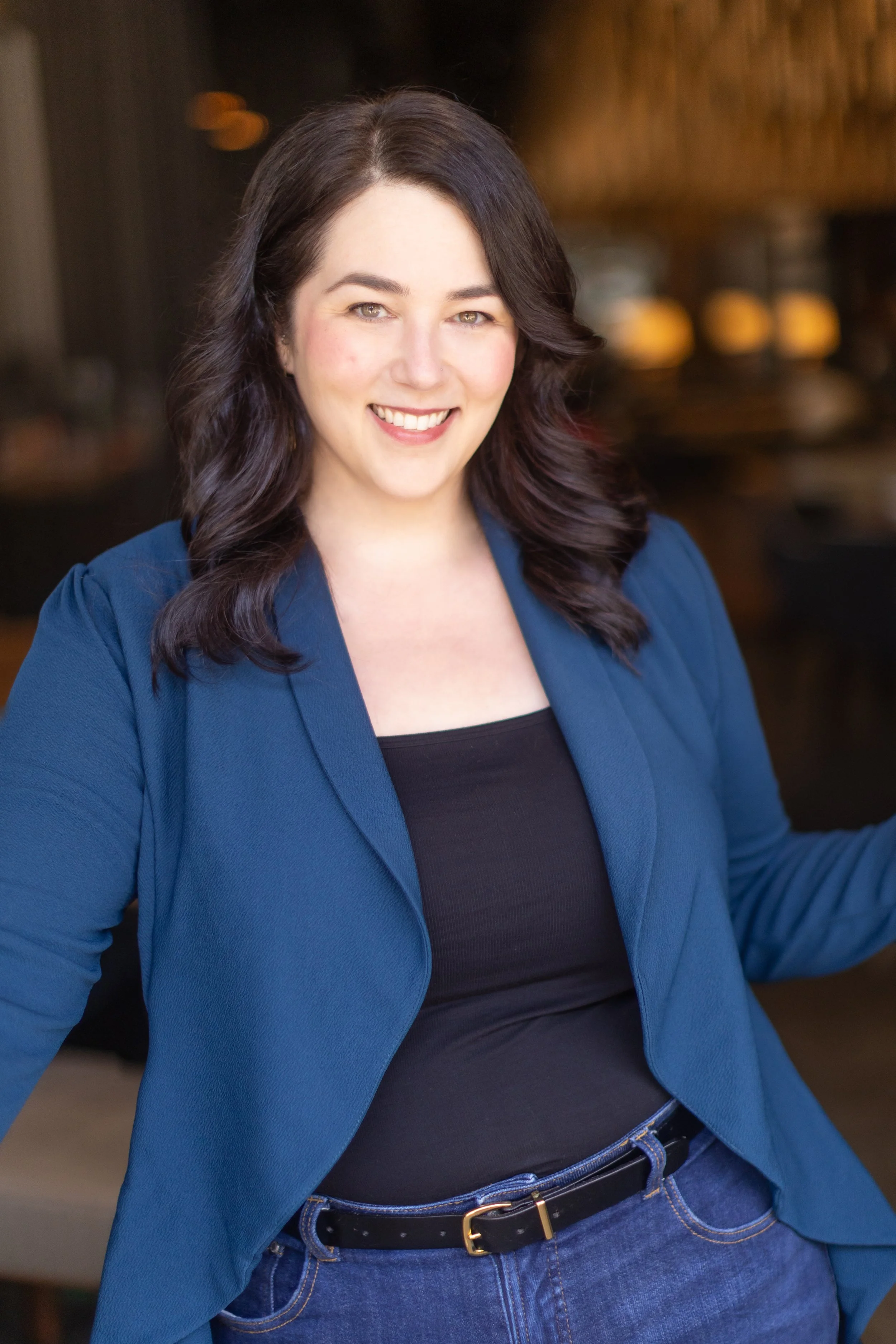
Ariel Glassman is the Founder & CEO of Common Great, a Seattle-based boutique fundraising and communications agency for nonprofits. Ariel is a fundraising strategist who’s helped hundreds of nonprofits worldwide rethink donor engagement, build strong fundraising cultures, and raise millions through a systems approach that actually works. Ariel is known for seeing around corners, untangling complex challenges, and turning “that's the way we’ve always done it” into new possibilities. Ariel is also a sought-after educator and trainer, teaching fundraising and nonprofit strategy and tactics for organizations, universities, and funders across the country.