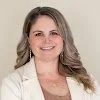
Season 2, Episode 6: Step Zero: Reclaiming Your Narrative and Redesigning Your Career with Aleenah Ansari
How to audit your transferable skills, use jealousy as a compass, and build a network that supports the current version of you.
Whether you’ve spent 20 years in one field and realized you’re unfulfilled, or you’re just a few years into your first job and realizing the path you were "supposed" to take doesn't fit who you are, this episode is for you. Ellen is joined by Aleenah Ansari—a writer, content creator, and strategic creative who specializes in helping people find and amplify their own stories.
Ellen and Aleenah dive deep into "Step Zero" of a career pivot: reclaiming your narrative. Aleenah shares why jealousy might actually be your most honest career coach and how to perform a skills audit that honors your humanity, not just your job titles. They also explore how to apply human-centered design to the workplace, reimagining our environments to work for us rather than feeling like something we need to escape.
This conversation is a masterclass in owning your story before someone else writes it for you. They discuss how to make networking feel authentic to the current version of you and why being honest about being in transition is the key to building a supportive community. For anyone ready to stop starting from scratch and start designing a career with agency, Aleenah’s insights provide the roadmap to get there.
In this episode, Ellen and Aleenah discuss:
Step Zero: How to reclaim your professional narrative during a career transition.
The Jealousy Compass: Using envy as a data point to identify what you actually value.
Skills Auditing: Why you aren't starting at zero and how to identify your transferable "human" skills.
Human-Centered Design: Applying design thinking to your career and your workplace.
Authentic Networking: Building a community that supports the version of you that exists today.
Resources Mentioned:
Aleenah’s TEDx Talk: "How to Reclaim Your Narrative"
Uncompete by Ruchika Malhotra
The Design of Everyday Things by Don Norman
Tags: Career Pivot, Personal Branding, Transferable Skills, Human-Centered Design, Career Change, Narrative Identity, Professional Development, Networking for Introverts, Workplace Culture, Design Thinking, Mid-Career Transition, Women in Business.
TRANSCRIPT:
Ellen Whitlock Baker [00:01.898]: Hello everyone and welcome back to another episode of the Hard at Work podcast. I'm your host, Ellen Whitlock Baker, and I have an incredible guest here with me today, Aleenah Ansari, who is a writer, content creator, story and brand coach, and so much more. Aleenah, I'm so excited to have you here. Thank you for being here.
Aleenah Ansari [00:25.15]: Of course, thank you for having me.
Ellen Whitlock Baker [00:27.532]: Aleenah and I met at a event that was really, really awesome with, it was just a group of women getting together to talk about, it was actually for Ruchika Malhotra's book launch, her book, Uncompete, which I've talked about here multiple times. And we just got to talking and Aleenah's amazing. And so was really happy to get to talk to her and learn a little bit about what she does. And I know that she is going to be so interesting and helpful for all of you. Without further ado, Aleenah, why don't you tell us a little bit about yourself? know, folks have heard your bio. What do want people to know?
Aleenah Ansari [01:05.738]: Yeah, well, I feel like, you know, there's so much pressure on bio. So I feel like I have like many versions of them. But I think like, if you were to catch me on a typical day, I would say that I really identify as like a storyteller and a strategic creative. So somebody who loves to find the story and everything. A lot of what I do is like interview based storytelling. So if I have like a question or a topic that's on my mind, how can I find particularly a BIPOC expert to help round out that story and kind of answer the questions and topics that we all feel like we need to know, but we weren't taught in school. Like these questions of like, how do I negotiate my salary? How do I draft a prenup? How do I create my own wedding traditions? Like, especially as a queer person or a BIPOC person. These are all things that were kind of like dilemmas or questions that I had that I felt like I wasn't the only one that had them. And then I would find an expert that I would often interview and turn that into like interview-based articles. And then I'm experimenting with turning that into video content too. The reason why I identify as like a strategic creative is like, I love the story and everything, but I really am like a STEM girly. And I think a story is only as good as your ability to reach the right audience. Like everything around the story of like, how do you amplify it and how do you ensure that it's action oriented and how can you repurpose content across channels and how does the story that you would have told five years ago differ than what you would tell today? And so I think that is really a core of my work is that the stories I'm telling are always evolving because life and work and our priorities are always evolving and creating space for us to tell like nuance and interesting stories that change as much as we do.
Ellen Whitlock Baker [02:49.006]: So I totally need to hire you to help me. Because I'm learning storytelling is hard. know, trying to like working on your personal brand. And we talked last season with my friend Cat O'Shaughnessy that she's a personal brand person too. And it's just hard when especially for women. And one of the reasons I definitely wanted to talk to you is you have such good advice. You do workshops, you do one on one coaching. But for women in particular, who want to sort of like learn how to define themselves in a new era, I guess is the way I would say. And I was telling you earlier, this a lot of my clients actually are people who are in their mid-career, 40 plus, and have decided they wanna do something totally different than what they've been doing most of their life. And they just feel like, I don't even know who I am. I don't know how to jump into the job market. like all the advice is for people who are just out of college, like, what do I do? And so that was one of the big reasons that I think we can have a great conversation about that. And that's a lot in one statement. But when you think about personal storytelling in the context of maybe somebody who's been through some life and maybe feels different than they did 10 years ago, but doesn't exactly know how to articulate it. What are some of the things you work with people on or what do you talk about when you get into that with folks?
Aleenah Ansari [04:17.754]: Yeah, that's a great question. And I think, you know, this question of like, I'm at a crossroads, what do I decide to do next? I think something that I remind like my clients and my mentees is that you don't have to boil the ocean. And you also don't have to do like everything at once. So if your life was like the game of life, or if it was like a long winding path, what's the next best thing that you can do for your career, for your business, for your passions? And how can you take small actionable steps towards that. And I think a lot of times for people that I meet, the reason why they're looking for a new job is because they feel like they've learned everything where they are. They feel like they already know it's the beast that they know. And sometimes it's like I've always had this other interest or desire and I've never let myself pursue it. And there has been some kind of inciting action that makes me feel like I'm ready to switch it up. Or like in a worst case scenario, people are affected by layoffs or like their clients are changing or the market is changing. And that's kind of the conduit for trying something new. So I would say that. Yeah.
Ellen Whitlock Baker [05:20.991]: or the workplace is super toxic. I'll just add that because that is probably the number one reason why I talk to clients who want to change. just to add that because there's this element of just disappointment and distress because it wasn't supposed to be this way. you follow your career and you're like, and I'm doing all the things right. And then you're miserable. And then you're like, now what? So there's this extra element of despair, I think.
Aleenah Ansari [05:51.552]: Totally. Yeah. And I think on the flip side, like there is a desire for ownership. Like I want to feel ownership in my career and like, you know, company may decide that like my job has been eliminated or it's redundant. But I think there is power in saying like, I'm the one that actually wants to make a change. Like I want to move disciplines. I want to move companies. I want to start my own business. Like that I think takes real strength to know what you want and that it's something different from this predetermined path and then to take steps towards it. So that is inherently brave and scary. And I think many of us have these realizations later in life because we're told like, this is who you are. This is what you can do. This is what you studied. And it is radical to say, I know what I have done and I want to do something else. So there's validity in like being honest with yourself. And that is really hard to do even as like a step zero.
Ellen Whitlock Baker [06:44.013]: It's so, that's actually the hardest part. You nailed it. Like I do, I think that's so true. And especially, I think for those of us who grew up at a time when we were taught not to complain about work at all, you know, it's, yeah, it can be really challenging. okay, so you're in that boat. How do you get to step zero, let's say, if you are... you're sort of miserable and you know something needs to change. And I guess you don't have to stay on the miserable thing, although I do see that a lot. But you're unfulfilled, maybe. And you want to change. How do you get to that place of reclaiming it for yourself, reclaiming the narrative?
Aleenah Ansari [07:29.864]: Yeah. So I think if you're feeling a little lost about like your career, your interests, your passions, and you just know that you want something different, I'm a big believer in kind of taking stock or taking inventory of where you're at now. So even if you're in like a job or a place that you don't 100 % love, can you take stock of the things that you do like and that you don't like? Maybe something you really like about the work that you do is that it's like public facing, like the things that you make, they live out in the world, people react to them, you're getting feedback, positive or negative, like this idea of creating something and having it exist, like maybe your job gives you that. But what you don't like is that you are not, you don't get to be involved in decision-making, like you don't get to shape that experience or that product. Or maybe you don't like you're in a place where you're not or you feel like the company is not innovating at the level or the speed that you want. Like all of these things are signals of like what you really like and enjoy and also what you don't want out of your next company, place, opportunity. So I think that is one piece of like really listening to yourself and what you want. I think the other thing to remember is that you're not starting from scratch. I feel like there's this idea, this like zero sum thinking that if I change my path, everything I'll have done up until this point has been wasted. And I think that like energy skills, passions are always renewed. They're not finite. They exist and they can like manifest in different forms. So maybe even if you're making a discipline switch, there's probably a lot of transferable skills. And that's a lot of what I do with my clients is like, what is your dream job or like something that you want to be doing? And how have you done versions of that where you are? And in all likelihood, there are probably a lot of overlapping skills of like being able to advocate and present your work, to communicate with stakeholders across difference, to manage budgets and constraints and timelines. Almost every job has a version of that. You might just be applying those skills in a slightly different way, or maybe you play a different role on the team. And I think like when I talk to people and we're kind of like rehashing their job search materials, their website, their business materials, there is kind of this like secondary outcome of people feeling more confident because they realize that they've done so much more than they've realized and that what they really needed was a sounding board. So I mean, it can be a coach, but I think even talking to your friends or like talking to people that are in jobs that you want to be in, what was their journey to get there? Ask them, like what job did you start at at this company and how did you get where you are? What did you study and do you feel like you still apply those things or is it different? Like kind of understanding the journey to get there. You might find out that you actually have more in common with that person than you realize. And then you can start to assess like, are there any gaps or things that I need to learn to be better suited for this next opportunity? And then that's really where like you can have focused and measured steps and work to figure out like where there are gaps you need to fill, but also like feeling confident and presenting the things that you already know. I think people underestimate the value of talking confidently about what they are capable of.
Ellen Whitlock Baker [10:34.885]: Yeah, I love that. It can feel like it's all gone if you change disciplines in particular, you know, and there's so much transferable. And I work with my clients as well to just be like, let's make a list of the things you can do. And there are so many things that are transferable, but I find that it can be hard for folks to get there. And I'm curious, when you work with clients, how do you get them to dream? or to really be in that space of like, not only dreaming, but also like accepting and recognizing that they're bad asses because sometimes we have a hard time with that, you know?
Aleenah Ansari [11:11.254]: Yeah. Yeah, think dreaming is an exceptionally hard skill. Like, I think it's one that has to be learned. It's one like my therapist and I talk about all the time of like, maybe this is your first time dreaming of what you really want because you've done like what you've been told to do. And I think like something that people underestimate is it's something I covered actually in a TEDx talk that I gave, but I tell people to really listen to their jealousy. Like if you see somebody doing something that you really admire instead of being like, I shouldn't feel that way. Like actually listening to that and then asking yourself, why am I jealous of this person and what they're doing? And actually, what does it say about me and my desires, my interests, my passions? Ruchika's book, Uncompete, also talks about this. There are actually many books that talk about this concept. And I think it is important to reframe jealousy because when we listen to it, it actually reveals our own deepest desires. I went through this really early on with like, with my business where I had like a mentee who came to me and she was like, I just wrote this story for Slate that was all about like companies that are actually backing up their diversity, equity and inclusion promises a year later, like a year after 2020. And I, my immediate response was to be jealous and to say like in my mind, like, I should have gotten an opportunity like that. But I think then I paused and I said, well, what about this is really like, why am I latching onto this? What does this really say about me? And I realized like, I was really drawn to this idea of like, writing the stories that I wanted to read when I was younger, or even like following my curiosities and writing about them in a way that other people could learn from. That became the foundation of my business with this guiding idea that if I have a question, I'm probably not the only one that feels overwhelmed, confused, unsure, and curious about a topic, can I pitch it and also then be the one to show up as a subject matter expert and bring in other experts to create and write that content? So jealousy tells you a lot, like, although it can be like a hard pill to swallow, it does tell you what you really care about. As long as you're able to really reflect honestly with yourself and say like, what is it about this jealousy, this person, this thing that I'm seeing that I really want for myself? And also, am I willing to take steps to get closer to that if it is really what I want?
Ellen Whitlock Baker [13:40.802]: Yeah, totally. It's such a powerful message and learning because especially in this last year of starting my own business, watching other people get contracts and get clients and blah, blah, it can be really hard because you're like, why am I not there yet? Or I didn't get that talk or I missed that client or whatever. I loved learning about that in Ruchika's book and talking about that with you now. And I love the concept. What I try to do now is when I feel that jealousy, I try to turn it around to hype that woman. And to just be like, that is awesome that you are doing that. Congratulations. It makes me feel a thousand times better, even though it just, I don't know, just like reframes it in a way. And then I can think of it as a goal. Like, okay, I want to do what Aleenah did. Like, I think that's really cool. Maybe she'll talk to me about how she got there, you know, as opposed to Aleenah gets all the good stuff, you know.
Aleenah Ansari [14:48.048]: Yeah. And I think my version of this is like many of the people that I have been jealous of have become like my friends and my mentors, because I'll reach out to them like similarly saying like, it's so incredible that you like landed this partnership or that your business hit six figures and that you had this opportunity. I would love to talk more about your journey to getting there. And sometimes I'm actually able to interview them. Like I interview many entrepreneurs about their nonlinear journeys and also authors. And what's so fun for me in that is like, I get to learn about their journey, but then I also get to share it more broadly. And then they get to have like the joys of like being in the Seattle Times and print for their book or being featured in an insider article and they get expertise and then I get to learn. Like that is truly the win-win of it all is like we all get to learn from the process. But I think to do that, you do have to set your ego aside and say like, this person may have something that I don't have and that's okay. I really want to celebrate it and I want to learn and understand the journey to get there. And there's so much joy in that.
Ellen Whitlock Baker [15:50.198]: Let's talk about that because you seem, as far as I can tell from meeting you in person and then also reading your work and looking at who you've talked to, you're not afraid to reach out and talk to people. And one of the things that you're an expert in is that sort of networking and community building, which is such a huge part of changing jobs and also being satisfied in your job. think, you know, all of that, finding that community is so important. And if you're looking to change jobs, talking to people who have other jobs that are different than yours is one of the first places to start. think, I mean, but you tell me if what you, how do people, like how do you coach people to do that, especially when they feel maybe embarrassed or like, you know, again, because we've been told this lie that we should have this one career for our whole lives and why would you throw all that away? I've heard that term before even. And how would I even explain to someone else that I've been a dermatologist for 20 years and now I want to go into public health? You totally can. And a lot of it has to do with some of what you talked about earlier with is that sort of self-confidence. But how do you get started on those little networking moments? And if you're not brave about that, it's not your favorite thing to do, how can you trick yourself into doing it?
Aleenah Ansari [17:24.342]: Yeah. I mean, I think first off, there's so much to be gained with being honest with yourself about what you want, and then also being honest with other people. So even when I was really, really early in my career, my dream was to find somebody who was a storyteller in tech, once I realized that I wanted to start my career in tech. And my process as a 20-year-old intern was I would do three one-on-ones a week with people and I would tell them like very explicitly like my dream is to be a storyteller in tech. I want to bridge creativity and strategy. I want writing to be a big part of what I do. How does storytelling show up in your work? And we would kind of talk about it. And a lot of times like I would even be honest and say like, I don't feel like I have a perfectly linear path for this. I actually, when I started in tech as an intern, I was a public health major. And then I later switched to human centered design and engineering. And I would tell people like, I'm in the middle of a transition. And I found that like, vulnerability begets vulnerability. Like by sharing that many people were like, I totally understand. Like I studied journalism in college and then I pivoted to tech much later in life because a friend told me about this opportunity. And so that honesty of like where you've been and where you want to go, think helps because people will tell you about that story, but you have to be willing to ask and to be honest. Another thing that I found helpful is like just like the network effect or the snowball effect of like after I talked with somebody and I shared a little bit about me, they shared about them, I would say based on what I've shared, who are two to three other people you think I should talk to that might be doing this kind of work, navigated these transitions, and then from there like you're able to meet more and more people. in an ideal world, the further you get along, the closer you might be to working, to finding somebody that's like on a team that you want to be on, somebody that might be a future collaborator. Like you get closer to realizing what you really want and what you don't want. So this does take a lot of effort, but I would say like what's more important is like discipline. So can you create like an actionable but realistic goal for yourself? So I had set the goal of three people a week because that's what my professor had told me. Even in like the job that you're in, whether you completely love everything about it or you're looking for a change, can you meet like two new people a month or can you set a reminder on your calendar every quarter to check in with people that you've really connected with in the past so you're like staying up to date? I think all of those things go a really long way.
Ellen Whitlock Baker [20:02.359]: Great advice.
Aleenah Ansari [20:03.776]: Thank you. Like I'm also a big believer in like reframing traditional networking as relationship building. So I think really what the difference to me is, that a relationship is two ways. Like you're not just taking things, you're also getting things. And even I tell like my mentees who are in college, like that the people that they meet are learning from them just as much as they are learning from that conversation. And I'm lucky to have had mentors who have reinforced this. Like when I was an intern at a large tech company, I would meet with senior leaders and they would tell me like, hearing from you is really valuable because I wanna know what the newest people at our company think just as much as like the senior leaders and the people who are in middle management. And that was really important to me to say like, I have value to get, but I also have value to give. Like that is important too that like when you're meeting with somebody, can you offer things? Like if somebody tells you that they are really trying to grow and they're like, financial wellness, if I found a really great book or I wrote a roundup, I'll send it to them to say like, hey, I think you would really like this. And actually, like, I think this author is coming into town, like, I'd love to go with you or like, I'd love it if you went, I feel like you'd really enjoy it, like, keeping them in mind, wishing them like a happy anniversary for work or their product launches that you say that you say congratulations, or you all of those things are really like what make a relationship to me.
And I think that's what most job seekers miss is they may be having a lot of conversations, but they may feel transactional to the other person because they may feel like, even if it's not true, it may feel like, you're only meeting with me because you want a job. And I think my mindset, especially as a journalist, is I want to meet people to learn from them. And I want to be able to support them with whatever knowledge I can. I want to help them as much as they help me. And maybe like neither of us refer each other for weeks or months, but at least for supporting each other's work. Like that to me is still a relationship that's really valuable. And that takes like discipline and continued work to make it a relationship that lasts.
Ellen Whitlock Baker [22:09.879]: I love that, that two way, you're so right. And that goes back to that confidence and that worry that you're not being able to talk about yourself confidently or you don't think that you're able to do anything else because you've never done anything else or you've been doing the same thing for a long time or whatever. That's why I love that that is step zero because it, everything else feeds from that. And I absolutely love relationship building as opposed to networking. I think when people think of networking, you think of those really awkward, like speed dating networking things that you've been through before, which I'm an extrovert and I hate those. You know, but I love, I love that so much. And, and it is so true. It is bananas. How somebody you meet four or five years ago, you can stay in touch with and then totally come through for them or they come through for you or, you know, it's just a rewarding relationship. Whether anybody does anything for each other, it's rewarding, you know? So I think that's really smart. I also really like what you're saying about set a goal, because it can feel really overwhelming, especially if you're in a rough job and you're already feeling like underwater. To like bolster, to muster the energy to even like reach out to people you don't know and industries you never heard of, you know, that feels really awkward. But I think that setting those goals is so smart. Like, can you do one a week? Can you do one a month? Start super tiny, you know? But I think that's really, really solid advice because otherwise you're just like, I feel like I have to reach out to 25 people and now I didn't, so I've failed, you know?
Aleenah Ansari [24:01.69]: Yeah. And I think like, I feel like maybe an area of nuance to this is like, when you're not feeling in the best spot yourself, I think it can be harder to reach out. So like, when I got laid off from my full time job in the month after, I wasn't really talking to anybody. And I knew it wasn't my fault. But I think I had real fears of like, how do I introduce myself? Like, thankfully, I still had my business. And it was a reason that I did is that I never wanted my day job to feel like everything. But I had real fears around explaining to people that I had been affected by layoffs. And I kind of talked to my mentor about it. And what she told me is like, you only have to share as much as you feel like you need to. If you want to share the full story of like, I got laid off and it's really making me reckon with what I want out of a career, the discipline I want to be in, you can say that. And you don't have to share that story with every single person, but you can choose to share it with the people that you trust.
I also think like, if I've learned anything as a journalist, it's like all of us have inner lives and you would be surprised how many people identify with you and understand what you're feeling, especially like the hard things, even if they're not saying it. I have met dozens of people when I got laid off where I would say like, I'm really questioning the industry I'm in. I'm questioning my worth as somebody who is laid off. And people would say like, I remember going through a layoff a year ago or like 10 years ago or when it happened to my spouse or it happened to my friend. And you need to remember that like it's not a reflection of your worth, like, but it's hard to in the moment, you know, like even saying that out loud to somebody else would be surprised how many people understand the struggle just because they don't talk about it to everybody doesn't mean it's not true. So that's why I am an advocate of vulnerability. Yeah, is like, that's how we connect. And if you don't say it, then nobody will know to like have that as an opportunity to share with you.
Ellen Whitlock Baker [25:57.612]: I love that and it's brave. It takes bravery to get there. And I love that you're saying, if you're not ready, you're not ready and that's okay too. Like I think forcing it, there's a difference. I don't know. I find there's a difference between forcing it and doing something.
Ellen Whitlock Baker [26:11.235]: You can be slow moving. I think that's really, I think that's really true. And I guess that's sort of what I wanted to talk about too, is like if you feel like forcing yourself to do something you're not ready for or you're already feeling bad and then you force yourself to do it and then it doesn't go well, because you're already feeling not confident or whatever, that's almost worse. Like it's okay to take a beat and be like, I'm just not ready to network yet or I'm not ready to tell people what's going on yet.
Aleenah Ansari [26:41.144]: Yeah, and I think like, I even, like I'm a big advocate for like, you can set an out of office for your life. Like if you're like, for the next two weeks, I'm just gonna focus on like, being present with myself, resting, reflecting. And I think that's okay too. And I think that's what, especially for people who are in mid-career, I think there's this pressure to always be on. And I think that we forget that like, we are human beings first. And so taking that time for yourself, I think is really, really important.
Ellen Whitlock Baker [27:11.458]: Yeah, it's funny, I actually did that. When I first left my last job, I was just like, for a month, I'm not doing anything. Like, I'm just going to be, I'm going to take my kids to school, I'm going to pick them up, and I'm going to do some projects around the house that I've been wanting to do for five years. And it was the best thing I ever did for myself because it allowed me that space to dream, like you were talking about, to get into that mode. And I don't think I would have been able to start my business if I hadn't had that space.
Aleenah Ansari [27:42.129]: Yeah, I think that's so true. And I think like, what's interesting about dreaming too is like, it's not always like this big, grandiose thing. Sometimes it's like, I want to be able to have lunch with my partner once a week. Or I want to be able to go for a walk in the middle of the day. Like, those are dreams too. And I think that's really important to remember that like, your dreams can be small and they can be about how you want to live your life, not just like what you want to do for work.
Ellen Whitlock Baker [28:12.654]: I love that. So, I want to pivot a little bit to your work with storytelling and branding. Because I think this is where a lot of people get stuck. They're like, "Okay, I've done the reflection, I've done the dreaming, I know what I want to do... but how do I tell people?" Like, how do you help people start to craft that story, especially if they are moving into something new?
Aleenah Ansari [28:38.210]: Yeah, so I think like, the first thing is to realize that like, you are the narrator of your own story. And I think that like, we often let other people narrate our stories for us. Like, our boss tells us what we're good at, or our friends tell us what we're good at. But you get to decide. And so I often start with like, what are the things that you've done that you're most proud of? Not just like, what's on your resume, but like, what are the things that made you feel like, "Yeah, I did that." And like, let's start there. Because that's where the passion is. And that's where the real story is.
Aleenah Ansari [29:15.442]: And then we look at like, how does that connect to what you want to do next? Like, even if it feels totally unrelated, there's always a thread. Like, maybe you're a dermatologist who wants to go into public health—like you said earlier. Well, why? Like, what was it about being a dermatologist that made you realize that you wanted to do public health? Maybe it was like, seeing that people couldn't afford their medications. Or maybe it was like, seeing the same issues over and over again and wanting to address them at a systemic level. That's a story. And that's a really powerful story.
Ellen Whitlock Baker [29:48.331]: That's so cool. And I think that's where people get caught up, is they think it has to be this perfectly polished thing. But really, it's just about being honest and finding those connections.
Aleenah Ansari [30:02.118]: Exactly. And I think like, the more honest you are, the more people are going to connect with it. Because like I said before, vulnerability begets vulnerability. If you're honest about your journey and your struggles and your "why," people are going to want to help you. They're going to want to be part of your story.
Aleenah Ansari [43:52.567]: Why aren't we asking these people with so much knowledge and expertise to share their story and to be raised as a subject matter expert? And so once that kind of like awareness was clear to me, I knew that pretty much from that point on, almost every single person I interview with few exceptions, I would say 95 % of the people I interview are BIPOC women.
And then there's also like intersecting identities. Many of them are queer. They may have a disability, visible or invisible. Many of them are first time business owners, first generation college students. And I think I seek out their perspective because they are able to bring the nuance of things from their lived experience and from the communities that they're from, right? This idea of negotiating your salary is a good idea. Of course, we're told to do it, but what does that mean when you are a first generation college student and nobody in your family has ever made as much money as you and you don't wanna lose this opportunity? How do you manage the guilt and the weight of that? And so those are questions that I've thought about and I think bringing in a BIPOC expert or somebody with some of those identities, they're able to speak to some of those like nuances and also like the emotions of being somebody to do this kind of thing for the first time.
I interview a lot of entrepreneurs like about their nonlinear journeys. And I also interview a lot of like authors, first time authors, authors about their debut books, and all of them, like, or most of them are BIPOC, or at least like women. And that journey is very different than somebody who was DM to say like, hey, you should write a book, right? Somebody who has like been pitching over and over, who's been trying to raise their profile, who's been creating for a long time, but hasn't always been seen as an expert in what they do despite having the expertise. Those are the people that I think deserve to be spotlighted and they're able to bring the nuance that I want. So if you're somebody who wants to do this, I think my biggest piece of advice is that you have to be really explicit in that that's what you're asking for. So like many years ago, I was writing a story about receptive multilingualism. It's the concept that like your family, you can understand the language that they speak, but you can't speak it yourself. So like, there's some level of understanding, but you can't have a bidirectional conversation. And I was curious how this shows up for like, particularly like second generation, third generation children of immigrants. And I really wanted to interview a therapist. And I didn't have like a big network of therapists. I knew I, for the story, I wanted a South Asian therapist because it was kind of like a personal essay and I'm also South Asian.
And so what I did is I went to a few different organizations and I said, I'm writing this story. It's for this publication. I'm specifically looking for a BIPOC therapist, ideally a woman or South Asian, because that speaks to like the topic of the story. And what I found is if I don't say that, I will be given typically by default a white male expert. So I have to say like, I want a BIPOC expert. When publicists reach out to me, I'll say, thank you for sending me this book. I'm really interested in highlighting BIPOC authors. Can you keep me in mind for BIPOC authors in the genres that I cover, which is like romance, memoir, graphic novel? And then I start to see the tide turn where I am getting pitches about all these BIPOC authors that I didn't know about. So it is unfortunate that like this won't happen by default. So if that is not happening in the circles you're in, then be really specific about what you're looking for and ask for it.
I think thankfully like times are better too where there are entire databases. Like I knew that I wanted an accountant of color for myself, but also for a story I was writing. And there is literally an accountants of color database that somebody ended up sending me. And I found some accountants that I've like interviewed for various stories and I've worked with. So don't underestimate asking your network as well. But if you don't have a diverse network, then you're not going to see diverse recommendations. So that also is its own question is if your whole community of experts doesn't reflect the diversity of the human experience and your readership and your clients, maybe you need to start looking more broadly or maybe you need to question where are other places that I can find experts that don't necessarily always have my experience but can still teach me something about the world and about the way diversity, equity and inclusion shows up in everything we do.
Ellen Whitlock Baker [48:18.552]: A thousand percent, I love that. We also know that the algorithms on things like LinkedIn are biased. And so you're seeing content by white men more than you are women of color. You're seeing content by white women more than you're seeing women of color. And there's a lot of reasons for that that I don't even totally understand. I went down a rabbit hole for a while there, but you can't count on the information to be fed to you, I guess, is what I'm saying, especially if your network isn't that diverse. so I would add, go out and find those experts and read their books and learn from them. Because the typical person listening to this podcast may not be writing an article, but you are writing, you know, a conference session with slides. And if you quote Simon Sinek one more time, I'm going to bite my tongue because it's not that Simon Sinek's not smart and has good ideas. It's just that I can't get through a conference without hearing a quote from him or Adam Grant or, you know, Lencioni or whatever. And there are so many other voices out there. And you're going to find that those voices that are not all white men are going to tell you more about your workplace anyway, because your workplace is not all white men. so it's just, it's something I've been really working on. it's kind of like what you're saying for the interview snowball, because you'll read one person and then they'll cite like five, 20, 30 people in their book. And then you've got a whole other list of people to read and follow. And there's Ted talks and articles. you know, so I hope that if you're listening, you can commit to taking a step outside of your comfortable sources and start to really learn because I just, I see so much value in it. I learned so much more when I talk to people who are not the same experts over and over and over again than I would ever learn from them.
Aleenah Ansari [50:27.821]: Totally. Yeah, because I think like for me, as a queer person of color, like even me seeking out queer people of color to interview is like, there is like, there's a level of familiarity and understanding. And I think even for me, there is, there is kind of this reminder of like, I need to seek out people who are different than me too, in other ways, like, many of the sources for my stories are black women, because they are the ones that often have the most expertise about workplace and marginalization and like how we navigate conversations about money and also like what money really represents to us. And like, I've also been learning a lot about like indigenous feminism, like what is this idea of like, something that is yours that you've been told your whole life doesn't belong to you at all. Like, so I think people at the margins who may have identities similar to yours or not, they have a lot to teach all of us and also like, we should be supporting each other, right? But even if we don't interview them, to your point, reading their books, going to their events, asking questions, engaging in amplifying their content, and that will also feed the algorithm that we want to see more of that. it also helps those people hopefully raise their visibility and get the right kind of opportunities where their expertise can be heard more widely.
Ellen Whitlock Baker [51:41.678]: Yeah, totally. I love that. It's an important thing, and I want people not to sleep on it because it is easy to coast along, especially if you're in a role where you don't have to read books like that all the time. And you can be very comfortable with the management textbooks you have from business school or engineering school or whatever that are 20 years old. The modern workplace is continual moment of learning and unlearning and from lots of different sources. I, yeah, I just think that that's really great. And I'm so happy that you're able to talk about that. And I love reading all of your recommendations too. So it's good. Aleenah, thank you so much. This has been really, really awesome. I mean, what a breadth of topics that we covered. I know.
Aleenah Ansari [52:33.465]: Yeah, that's usually how it goes in my experience.
Ellen Whitlock Baker [52:38.722]: Well, you're so cool. You know so many different things that it's like, my God, we could talk about everything. We could have a whole other podcast on human centered design, I'm sure. But yeah, thanks for being on here. Where can people find you?
Aleenah Ansari [52:50.967]: Yeah, well, I'm pretty easy to find because nobody spells my name like me. So all of my work is at aleenahansari.com. There's info about my speaking and coaching and some of my favorite articles that I've written. And if you want to stay up to date about what I'm writing or in particular, when I'm looking for sources, you can follow me at Aleenahansari on TikTok and Instagram. And also I'm Aleenah Ansari on LinkedIn. I like LinkedIn, unlike a lot of people. I think it's a fun place to share content, but you'll find me sharing a lot of like the stories I'm writing, the books that I'm reading, and even just like topics that are on my mind that I'm wondering if other people have questions about, which often inspires the stories I create.
Ellen Whitlock Baker [53:33.752]: That is so cool. That's so cool. We will link all of that in the show notes along with Aleenah's Ted Talk. And I think you mentioned another Don Norman and I don't know, whatever else we talked about, but we'll put the links in the show notes. Well, thank you so much. And I really appreciate you being here. Thank you.
Aleenah Ansari [53:58.219]: Of course, thanks for having me.

Aleenah Ansari
Aleenah is a Seattle-based writer covering travel, holistic wellness, non-linear career paths of entrepreneurs, and representation in media. As a queer Pakistani woman, she believes you can’t be what you can’t see, which is why she highlights the stories of women of color, people with disabilities, and LGBTQIA+ folks in my writing. Her work has been featured in Insider, The Seattle Times, Joysauce, and more. She’s also a 2021 ADCOLOR FUTURE, Human Centered Design & Engineering alumna, and 425 Business 30 under 30 honoree. You can usually find her writing about her favorite hidden gems in Seattle and beyond, reading a book by a BIPOC author, and planning her next trip to New York.