Season 2, Episode 7: The A-Student Trap: Why “Doing Everything Right” Still Leaves You Unhappy — with Lauree Ostrofsky
How people-pleasers stop outsourcing their decisions and reconnect with their inner knowing
For anyone who has ever hit every goal and received all the praise yet still felt profoundly miserable, this episode offers a roadmap out of the "A-student" trap. Host Ellen Whitlock Baker is joined by Lauree Ostrofsky—coach, business and marketing consultant, and two-time author—to explore what happens when high achievers realize their current career no longer fits. Ellen and Lauree dig into the classic people-pleaser trap: being valued for one set of skills while the work that lights you up gets sidelined—and how that disconnect can keep you stuck longer than you want to admit.
Lauree shares the reinvention lessons she’s seen in her most successful clients, including: “find the linchpin.” She and Ellen talk about the small, crucial people and moments that bolt your next chapter into place (even when you don’t have a perfect plan), how gratitude helps you notice new doors, and why change doesn’t have to be a brutal, hustle-y leap off a cliff. If you’re burned out on overthinking and constantly needing a second opinion, you’ll love Lauree’s take on building self-trust and making decisions without outsourcing your confidence.
Key Conversations:
The "Linchpin" Strategy: Lauree breaks down how to identify the small, crucial moments and people that anchor a new chapter. By practicing gratitude for past "linchpins," listeners can open themselves up to noticing the new doors and connections appearing in their current lives.
Building Self-Trust: A look at how to stop "outsourcing confidence" and overthinking every move. Lauree shares a challenge from her own coach that forced her to send proposals without a second opinion, highlighting how ingrained the need for permission can be.
Fear with Compassion: Lauree explains the origin of her mantra, "I’m scared, but I’m doing it anyway." This philosophy was born from a life-altering brain tumor diagnosis at age 28, which forced her to redefine what was truly scary versus what was merely uncomfortable.
The "First Day of School" Approach: Instead of "muscling through" fear, Lauree suggests treating your inner anxious self like a child on their first day of school—offering snacks, comfort, and kind words to move gently over the start line.
Certainty in the Chaos: From keeping a puzzle in her office to finding "soft" ways to pivot, Lauree emphasizes that reinvention doesn't have to be a "hustle-y" leap off a cliff. It can be a series of kind, intentional shifts that prioritize personal happiness over corporate praise.
If you are looking for a softer, smarter way to pivot without losing your sense of self in the process, this conversation provides the permission and the tools to begin.
Career Reinvention, Overcoming Burnout, Self-Trust, People Pleasing, Women in Business, Professional Coaching, Mindset Shift, Career Change, Overcoming Fear, Personal Development, A-Student Syndrome, Intuition at Work, Life Transitions, Leadership, Entrepreneurship, Mental Health, Work-Life Balance, Self-Compassion, Pivot, Career Growth
Resources Mentioned:
Simply Leap by Lauree Ostrofsky
I'm Scared, But I'm Doing It Anyway by Lauree Ostrofsky
The Science of Stuck and Align Your Mind by Britt Frank
Learn more about Lauree’s membership program
Connect with Lauree Ostrofsky:
Transcript:
Ellen Whitlock Baker (00:02.525)
Hello everyone and welcome back to the Hard at Work podcast. I am thrilled today to be joined by the amazing Lauree Ostrovsky. Hi Lauree.
Lauree Ostrofsky (00:12.79)
Hi, Ellen, I'm thrilled to be here.
Ellen Whitlock Baker (00:15.409)
I'm so happy to have you. Thank you. Thank you for coming. Lauree, you're amazing and do so many things. And I can't even do you justice in an introduction, of which I will do, you know, officially when I do the intro for this. tell us, like, give us your 60 second Wikipedia entry. What do you want everyone to know about you?
Lauree Ostrofsky (00:37.698)
Yeah, so in the shortest term, I am a serial leaper. So it's not necessarily a founder. is, I like to do a lot of different things. And so I feel really lucky enough to have had a career where I've gotten to reinvent myself, helping other people reinvent themselves. So that means I've...
Ellen Whitlock Baker (00:57.171)
Hmm.
Lauree Ostrofsky (01:00.916)
built communities. I'm a two-time author. I used to be a speaker. I do it sometimes still. I coach. I'm a business and marketing consultant and all of that melds together in lots of awesome ways.
Ellen Whitlock Baker (01:17.747)
That's awesome. We have so much to get into. What were you doing before you leapt, sort of maybe the first time or the time you want to talk about?
Lauree Ostrofsky (01:28.674)
Yeah, so I started my career in marketing, public relations, and it was really exciting. I moved into New York City. I just had my work outfits and my little suits and loved it and then realized that what I was being paid for and, you know, in my role wasn't actually what I was being valued in, in the work that I was doing. And that really was the impetus to ultimately become a coach, but there was kind of like a lot of movement in between. But really it was that realization of I could keep doing this work. I'm good at it. I'm an A student from way back. So I know how to make my bosses happy and do the right things, but it wasn't fulfilling to me. And the things that my bosses most praised me for was not the thing that was going to get me another like an award or a promotion.
So that really was what helped me switch to where I am now.
Ellen Whitlock Baker (02:53.747)
I think a lot of us who are here listening to this are people pleasing perfectionists, straight A student, in some form of unlearning all of that.
Lauree Ostrofsky (03:07.779)
Yes. I see you, I feel you, I am you.
Ellen Whitlock Baker (03:20.091)
You are us. When did you first kind of start realizing that, wait, maybe this isn't the outcome I am looking for and what were you being praised for that you were like, wait, this isn't the end goal.
Lauree Ostrofsky (03:29.23)
Yeah. Well, think it's, you know, early in your career, it can often help to look at the people a couple steps ahead of you. If you see your trajectory and it's less interesting, less exciting, or in some way doesn't feel like it was meant for you, then that helps you start to realize like, I need to find an alternative. And that's really what happened to me. So the people that I saw
above me by a couple steps were really good at the media relations part, the actually doing the stories and calling people randomly that they didn't know and really pitching them on something and being very extroverted. And the things that I was really good at was I was so good at the client service. I was so good at understanding the members of my team and really making the work work for each individual. So I would often have someone from another team, know, some other manager come to me and say like, this person isn't working out on my team. Can you take them? Because I know you can figure out how to make it, you know, so like, had not, I mean, not exactly the problem staff members, but kind of the one that people couldn't figure out where to put, I could figure it out.
Lauree Ostrofsky (04:53.166)
And there was this other thing that would happen even with like my bosses and the owner of the company. We would be in a, in meetings with, you know, our, our big clients. And after the meeting, I would be asked by them, Hey, what do you think happened in the room? And I could tell you not just what was said, but the tone of voice, the, when our client actually looked down, I was like, if we don't change this one thing, we're going to be in trouble, even though they said this part was okay. And so that to me is exactly the skills I'm sure that you use as well that I use as a coach now, but it wasn't what I was being, you know, know, asked to do day to day. And so it was, it more was an inkling. didn't even know necessarily that coaching was an option at the time. but as I learned, like those are the skills that are valued. That's helped, helped me move in that direction.
Ellen Whitlock Baker (05:51.571)
I love that. Did you get to a point where you kind of saw, I mean, maybe this is kind of what you're saying, but like you saw what the future would be at that organization and you were like, you know what? No, I don't want that. Yeah.
Lauree Ostrofsky (06:04.748)
Yeah, yeah. absolutely. Yeah. I well, as I say to most fellow A students work is too important to not choose well. I have I have a number of friends who are like okay at their work and think of their work as a thing that they they go to or they do to make room for and enjoy the whole rest of their lives and
Ellen Whitlock Baker (06:17.788)
Yeah.
Ellen Whitlock Baker (06:31.238)
Mm-hmm.
Lauree Ostrofsky (06:32.494)
I am, I mean, whether positive or negative, I am pretty wrapped up into, and my self-esteem is wrapped up into the work that I do. And so I knew that at some point, the value I had in succeeding and in making other people happy and getting praise was only going to get me so far. Like that's what was keeping me in this, in this position in this industry was getting praise and doing well. And then I kind of realized like, at some point I should really like the work because this part is gonna run out.
Ellen Whitlock Baker (07:03.247)
Yeah.
Ellen Whitlock Baker (07:12.05)
Mm-hmm. The older you get, I have realized, or at least my clients and I'm sure you too, is like the praise is less important than your happiness. But it really, it takes a while to right-size that or even just, I don't know if the word right is the right word, but like just kind of temper that so that you're not living your life for somebody else's praise, which we're trained to do, I think.
Lauree Ostrofsky (07:40.685)
Yeah, yeah. I was thinking about the, you so much as an A student, I really liked the questions that you sent me beforehand just to be prepared. And I was thinking about in particular, one of them, no, that's okay. No, you did, yes, about the Wikipedia. But one of the questions you asked is about, know, women in particular, women leaping and reinventing themselves and kind of like, what is the unique challenge there?
Ellen Whitlock Baker (07:52.883)
of which I haven't asked one, but you know, hey, we'll try. I did the first one.
Lauree Ostrofsky (08:10.326)
And obviously we can't just speak about a whole gender. But I would say one of the things that came up for me when I was thinking about that before this interview is most of the women that I know have been trained in some way by their families or by their culture to be externally focused.
Whether that means being a caretaker or just being aware, it actually helps us be really good marketers and salespeople because we know what's happening when we go in a room and we know what people need to hear. And it also makes us A students, but it also really keeps us separate from the internal direction. And I feel like that has been most of the work that I've done with my own coaches and also most of the work I ultimately do with my clients. Most clients come to me because they want to make a change. They want to make some kind of career change or grow their business or move into a different industry. And underneath it, once we get started, it's like connecting to the inner knowing. Where is that? How do I get to make a decision that I can trust that I can make it myself?
Ellen Whitlock Baker (09:30.992)
Yep.
Ellen Whitlock Baker (09:36.432)
We talk a lot on the podcast about how in particular for women, like exactly what you've said, we focused others instead of ourselves for so many years and we lose sight of like, what are my values? And honestly, like, what is my goal? What does make me happy?
Know that if you feel like you've lost your way, if you feel like you can't answer those questions about what you actually need or want for just you, not for your family, not for everybody else, it's OK that you can't. Don't beat yourself up. And there's ways to get there. And you have your motto, I think, in the name of your practice is “simply leap”, which I love. And it's a book you wrote as well. And so you talk in that book about seven kinds of lessons about taking that leap. And I would love if you wanted to share some of them here because it's that sort of like, what is the catalyst when you're in that stage of like, don't exactly, I don't know what I want. I know it's not this. That's my first step. I know it's not this, but I don't know what it is. How do I even get there in a world where I'm a people pleaser or straight A perfectionist knowing that it's gonna be messy? So. Please tell us some of what you have learned and like to share with people about that.
Lauree Ostrofsky (11:55.671)
Yeah, I loved writing that book. And I loved it because I felt like I was in conversation with with my current clients, my past clients and my future clients like like we are in this together and this is about reinvention and and the way I designed it these seven lessons that I came up with was really from looking back at my most successful clients and seeing even though they took vastly different paths and they came for different reasons, they all kind of went through these same lessons in some way to reinvent themselves and go to the next iteration in a kind way, in a self kind way. think that there are as a a student myself, I have a mean teacher voice in my head or, you know, kind of mean parent. And that's the one that's like, you have to eat your vegetables before you can have dessert or like, are you doing it right? And maybe somebody is going to be disappointed if you make this decision. So the book is really like the kindest way you can do that. So that voice isn't here as much. And and you get to have room for a different voice.
Ellen Whitlock Baker (12:54.054)
Mm-hmm.
Lauree Ostrofsky (13:22.056)
And this actually can be fun. So the subhead to that book is “seven lessons on facing fear and enjoying the crap out of your life”. And there's an adorable cupcake on the front, that really is like, there's this lightness to it, even though reinvention is scary and unpredictable and all of that. so the lessons are really kind of what I've seen my most successful clients do. And one of my favorite of those lessons is called find the linchpin. And I start by talking about, know, what is a linchpin? So a linchpin on a car is what holds your tire in place. It actually bolts your tire to your car.
Ellen Whitlock Baker (14:04.643)
Mm, very important, yeah.
Lauree Ostrofsky (14:19.64)
Yes, exactly. And so you wouldn't go anywhere without this crucial small piece. And I think that we have linchpins, well, we do have linchpins in our life. If you go back to any kind of iteration that you've had in the past, there is likely at least one person, if not a few, that were pivotal in the door opening that you needed to, in the hearing the words or reading the book when you needed to. And it's hard to imagine getting through to the next stage without having met this person. And that to me is the linchpin. And so in the chapter I talk about, first let's identify the ones from the past. Gratitude is such a powerful action. We've read about it a lot, know, gratitude journals and things. And so it's like, okay, we're gonna be grateful for all of the linchpins that have come before. So send each of them a thank you note, mentally think about them and thank them and recognize and kind of hold them to the level that they deserve for that moment, even if you're not in touch anymore. It doesn't matter. It's kind of acknowledging the role
Ellen Whitlock Baker (15:05.579)
That's cool.
Lauree Ostrofsky (15:18.936)
people have played in these moments in your life, because that sets us up, gratitude sets us up to more likely see other linchpins as they show up. So the other thing that I talk about in terms of opening yourself up to potential new linchpins is, and it can even be people you know that take on a new, more important role at this stage in your life. And that is to notice what helped you meet or find the linchpins of the past. So one linchpin I met when I first moved to Washington DC, I lived there for about five years. And when I first moved, there's a woman who was throwing like networking events for small business owners. And so I was like, okay, all right, this is a great way to meet people.
Ellen Whitlock Baker (15:51.077)
Mmm.
Lauree Ostrofsky (16:17.742)
I was like, okay, I'm going to go. And I ended up meeting all of my friends from it. And it was because there were a lot of us who are introverts who felt like we should be there, but then we ended up being on like the back wall of the meetings. And then we like hung out and ended up being my best friends. You know, so was like, I needed to go to a place that I was slightly uncomfortable about that I thought would be an interesting thing. And I also had to look around in the room once I got there and see who my people were. And so that set me up for some of the linchpins that happened in that period of my life. It's like, if you never talked to the person next to you on the yoga mat in a class, but you did that one time and you met that linchpin that introduced you to your new best friend or your spouse, okay, you're gonna have to say hi.
Ellen Whitlock Baker (17:06.417)
Mm-hmm.
Lauree Ostrofsky (17:14.146)
Like that worked, you already have proof. So this isn't a new random thing. This is remember how it worked before and set yourself up to do that again.
Ellen Whitlock Baker (17:23.547)
I love that. There's this opening of yourself of being, I guess open to the possibility of these things that I believe is so important because you can go through life being pretty closed to those things. And I find that that sort of correlates with how busy you are, how stressed you are, how focused you are on others than yourself. And you're just kind of going through your life trying to get through it. And you're not lifting your head up and looking around and looking for those linchpins and thinking about that gratitude. That's such a good first step, I think, for people who feel that I'm just being lived by my own life as opposed to living it.
Lauree Ostrofsky (18:29.218)
I also want to say, like, I feel like I keep how important it is to remember that this doesn't have to be hard work. I think we have also been sold this thought that only things that are hard work are worth achieving. And...
Ellen Whitlock Baker (18:40.305)
Yeah.
Ellen Whitlock Baker (18:45.403)
Yeah. Yep. Yep.
Lauree Ostrofsky (18:49.218)
That's why I start with, think about the linchpins that already happened and kind of the ease sometimes that we think about them when we remember something from the past. Because when we look forward, we often have the gaze of like, where am gonna get this extra energy to do the hard work that's required to actually get to this next level or stage? And it's like, wait, actually if you look back instead and see,
Ellen Whitlock Baker (19:00.273)
Mm-hmm.
Ellen Whitlock Baker (19:07.357)
Yeah.
Lauree Ostrofsky (19:18.402)
be surprised and delighted by the ease of those previous moments, consider that it could be easy this time too. Consider that a door could naturally open or someone could seek you out instead of you like really exhausting yourself. So I think that some of us stay stuck because we feel like we have to be different or better or have, know, be the right weight or the right size or in the right headspace and it's like, no, actually, you just ran into that person on the street five years ago and they opened the door for you. It could happen again. Just walk on the street. Just go out there. It's gonna be okay.
Ellen Whitlock Baker (19:56.788)
It goes back to that straight A. I can't change unless I'm doing the change perfectly. And if I'm not doing the change perfectly, then it's not worth trying. it's just, I realized that in, I think I was in one of my coaching classes and I realized I had this realization that I was trying to be perfect about not being perfect. Like, I'm going to be the most non-perfect person ever, but I still want my gold star. And that is just behavior that is so hard to unlearn. So we are often scared to make change. And you have this great sticker, which I actually have Lauree sent me when it's, I'm scared, but I'm doing it anyway, what is that philosophy for you and how did you get there and what would you advise?
Lauree Ostrofsky (21:35.447)
Yeah, so that originally came from a really scary moment in my life. You've experienced something in your life where it's really scary, not just kind of scary. So as an A student, scary to me was quitting my job without a backup plan or potentially disappointing my parents.
Ellen Whitlock Baker (21:54.578)
Yeah.
Lauree Ostrofsky (22:04.334)
or getting a conversation wrong, not being accepted in a new friend group. There's these things that kind of feel uncomfortable in the moment, feel potentially scary or worrisome. I'm a worrier, so that's usually where I go. And then...
Ellen Whitlock Baker (22:08.285)
Mm-hmm.
Lauree Ostrofsky (22:21.698)
big things really happened, divorce or job loss or losing someone close to you. And for me, it happened when I was 28. So I was in that marketing job, scaling the corporate ladder, doing everything I was supposed to do and getting gold stars. And then I had an ear infection that wouldn't go away. And they discovered that it actually wasn't an ear infection. It was a brain tumor. And all I can describe is in the moment when they found it, a student in me was still trying to figure out how I was gonna be like, either how this wasn't possible because I had done all the right things. I ate all the vegetables I was supposed to eat. Five a day the color way was like this, I am eating five vegetables a day. I did all the things I was supposed to do. So that something bad doesn't happen to me, especially at 28, I've kind of clueless health-wise in terms of, you know, that stuff like this can happen. But it was, I was forced to do it anyway when it came to the brain tumor. I was forced into multiple surgeries and, you know, kind of like changing my life really abruptly, but it was that that helped me get a sense on the other side of what really was scary and what only kind of felt scary. And so that's when this motto or mantra, I'm scared in doing it anyway, kind of came from this really serious experience and then also helped me move through the more uncomfortable kind of daily moments that happened for all of us. And I would say that the reason why doing it anyway is there is like, we've been kind of sold this thing about it has to be hard work. Well, we've also been kind of sold this like, you know, mean teacher voice or mean parent voice in our head of like, you better do it. Like the only way to do something
Ellen Whitlock Baker (24:38.418)
Yeah.
Lauree Ostrofsky (24:41.762)
fantastical and, you know, like totally different is to throw yourself into it, is to jump out of the airplane. And so instead for me, I'm scared and doing it anyway, is first admitting that the fear is here and then being really kind to it. I liken it to like a little kid being scared of their first day of school. Most of us would not stop on the corner and be like, good luck kid. And like push them in the direction. You know, we would probably like even a stranger child, we would do this to, we would like walk them to the school. We remind them the great snack that they packed. We would tell them to like find a, you know, find the seed and like look for nice people. You know, like we would do kind of a couple thoughtful things to try to make sure that they're a little feeling a little more comfortable, a little braver. In that moment, even though they are gonna do the scary thing of walking into that classroom for the first time, there's some stuff around it that feels softer. And I think when we grow up, it's like, you don't get any of that softness anymore. And to me, that's what I'm scared and doing in any way is it is admit the feelings, notice them, take care of them and walk it kindly through the door just like you would someone on their first day of school.
Ellen Whitlock Baker (26:12.551)
That's so awesome. I actually just recently interviewed a woman named Britt Frank who wrote Science of Stuck and Align Your Mind. And Align Your Mind is all about parts work, essentially, it's IFS, it's something, family systems. I wish I could remember the I, but basically, you're made up of a bunch of different pieces and you have to sort of talk to those pieces inside you that are scared and or trying to stop you from doing something. That little kid maybe in you who's like, this is too scary. I don't want to go to this first day of school. And you actually have that compassionate conversation with them of like, it's going to be OK. Let me help you. And thank you for trying to protect me from potentially doing something scary and getting hurt. So I think that's such a beautiful metaphor. We can all think of that little kid on the corner just paralyzed in fear and what does it take to politely and kindly move that kid over the start line and you know that that kid is you. So it's this like I guess like self care that again like when you're other-focused or you're focused on getting to the gold star as quickly as possible you don't always stop for that.
Lauree Ostrofsky (27:34.861)
I'm thinking about like when I've done a launch in the past or yeah, or sent out individual invitations to one of my retreats, I will get into that place of like, it feels like I'm, I'm walking through mud. It feels so hard to like, do the next step and the next step and
Ellen Whitlock Baker (27:52.616)
Mm-hmm. I know that feeling. Mm-hmm.
Lauree Ostrofsky (27:57.613)
And it's like, you know how to send out an email, but it's like everything I can do to try to move forward. And so that's, mean, that's the adult version of that. It's like when it's so hard and it's mostly cause we're not sure of what's gonna happen and we don't really wanna take the risk. And yeah, that totally makes sense. And so like, you know, I have a snack. I drink some water. I always have a puzzle going in my office because I love puzzles. And to me, a puzzle is certainty. Life and work doesn't have a lot of certainty, but there's always a spot for that puzzle piece. It's certain. And so I have that as like, you might not be certain of what will happen when you send this email. But you, but you can go to the puzzle after and put some like certain pieces in place. And so I feel like we have, you know, I feel like the coffee industry is built on people self-soothing. Like I'm just gonna at four o'clock, I'm gonna run out and get a coffee kind of cause I'm tired and also cause I need a little treat cause life is hard.
Ellen Whitlock Baker (29:03.931)
Yep. Now, there's a whole industry that is built on that. And that's so interesting that you say that because I've been thinking about that a lot lately and how sometimes that's amazing and you just need your little treat and that's great. And sometimes it's a way to avoid doing the hard thing. We have this whole industry telling us about hacks. If you get this new Tupperware and meal prep, then your weeks will go so much better and you won't be stressed anymore. And it's this interesting premise of you have to fix something about yourself as opposed to just acknowledging that it's too hard to do all the things that are expected of you.
And it's really the expectations that need to reset. And so as you're talking about like, you know, that linchpin and paying attention to yourself and paying attention to what might be scaring you and kind of taking it little steps at a time, those are all beautiful ways, I think, to deal with that, like the root of the problem, as opposed to, I'll get a cookie and I'll feel better and then I don't have to worry about it anymore.
Lauree Ostrofsky (30:43.95)
I, I totally agree. And, we, yeah, I'm thinking about so much of what, when you repeat back to me some of the things that I've said, the thing that came to mind is, is slowing down, but it's slowing down in a way without saying slow down, because I think that
Ellen Whitlock Baker (31:04.455)
Yeah.
Lauree Ostrofsky (31:09.358)
I don't know if most of us know how to slow down anymore or think that there's permission to do that or whatever. So it's like, okay, I don't wanna push you to do something that feels impossible. Notice could be a little more accessible in this moment
Ellen Whitlock Baker (31:25.959)
Yeah.
Lauree Ostrofsky (31:36.739)
Because you already have those skills, you already have those experiences, you already have the past as a model of what works for you. So this isn't something that you've got to completely invent from scratch, that you have to change like astronomically. Like there's a lot that we can work with in this moment. And I agree with you, it's also about shifting expectations and sometimes just being in the moment or being with ourselves can shift those for us.
Ellen Whitlock Baker (32:09.081)
It can, and it can be really hard to find ourselves under all the noise that is happening there. So I know that one of the things that you talk about that you and I talked about when we chatted first is community. You said something that I wrote down. We're braver when we're together.
So I'd love it if you share a little bit about community. And then I believe you do have a membership group that folks can kind of be a part of to join a community.
Lauree Ostrofsky (32:42.722)
Yeah. Yeah. thanks so much. Yeah, I do think, I mean, this just goes in line with everything that we've said, which is we don't have to do it on our own because that also is one of those things we've been sold that like, it's only, it only counts if you've done it all by yourself. Well, I mean, one, that's really hard. It's almost impossible. And it kind of prevents most of us from even starting if we feel like we have to do it by ourselves. Like, and so community to me has been so important. So the first ever community that I created was for women deciding if they wanted to have kids. I called it mommy drama. And it was because I experienced myself and with my friends that most people, if you're a person of a certain age, if you're partnered,
The assumption is, of course you're gonna have kids. Lots of people have already made the decision for you before they've even had a conversation with you. And it can be challenging to figure out what feels like the right answer for me. And also, when does this feel like the right answer for me? And so I hosted a group of women. It's like that we could make each of our individual's decisions while in community with one another. And I could celebrate the decision that you made, even if my decision was different and even in like the safe place of not knowing, because when you have people around you making a decision for you, we're assuming you've already made a decision, there is a lot of room for you to say, don't know. That doesn't offer in someone being certain on top of, you know, on top of whatever your thought is. Yes, here's your answer. And so that, goes into our career decisions, that goes into starting a business and any, know, any parenting, like it goes in so many different directions. And so to me, community is about creating a safe space to say what's really happening, how we really feel that we don't know and that it's okay not to know, that we have each other to figure it out. To me, not knowing is part of leaping.
Ellen Whitlock Baker (34:57.395)
It is. It is. it's especially for women in business or leadership roles or anything, we're not supposed to not know. That's a sign of weakness. And I think anyone who's in a higher level leadership role, and that's why I love coaching people, because sometimes you're that only person that they can be honest with of, I don't know what the hell I'm doing here. And it's OK.
Lauree Ostrofsky:
Absolutely. And so that's my current membership is kind of built on that idea. It is it's called leap together. So very much what we've been saying. It includes two group coaching sessions, virtual every month. So it's a monthly membership. We also have in addition to those two group coaching sessions, we have co-working sessions that you can come to in the month. So if you need body doubling, that's it's called that in the ADHD community.
Ellen Whitlock Baker (35:47.014)
Love it. Love it.
Lauree Ostrofsky (36:08.78)
or something like that, like, okay, we're gonna co-work, you've got to work from home policy, I'm working in my home office, great, we're gonna be online together, set goals and celebrate together. And then that's how people access my private podcast as well.
Ellen Whitlock Baker (36:17.041)
Yeah.
Ellen Whitlock Baker (36:23.375)
We will put the link to all of that in the show notes because it's a great opportunity for anyone. I think a lot about because I work in the nonprofit sector a lot, those women.
Lauree Ostrofsky (36:24.684)
Yeah.
Ellen Whitlock Baker (36:43.027)
who are executive directors in the nonprofit sector. That is a lonely and very hard place to be. And I could see this kind of a community being super helpful just to be like, there is someone else who's having my same feelings, but they're in Ohio and I'm in Seattle, you know, and I wouldn't have met them otherwise. So I think that that's a really beautiful thing you're offering.
Lauree Ostrofsky (36:57.155)
Yeah.
Lauree Ostrofsky (37:00.972)
Mm-hmm.
Ellen Whitlock Baker (39:51.813)
Well, Lauree, thank you so much. This has been really awesome. And I really appreciate you spending some time with us today.
Lauree Ostrofsky (39:52.204)
Hahaha!
Lauree Ostrofsky (40:00.938)
Thanks so much Ellen. This is a pleasure. Thanks for all that you share with your listeners too. This is really special.
Ellen Whitlock Baker (40:06.054)
Of course, of course. Yeah, well, it's because I learned from great people like you. So all right. Well, thank you and everybody. We will see you next week's episode. Take care.
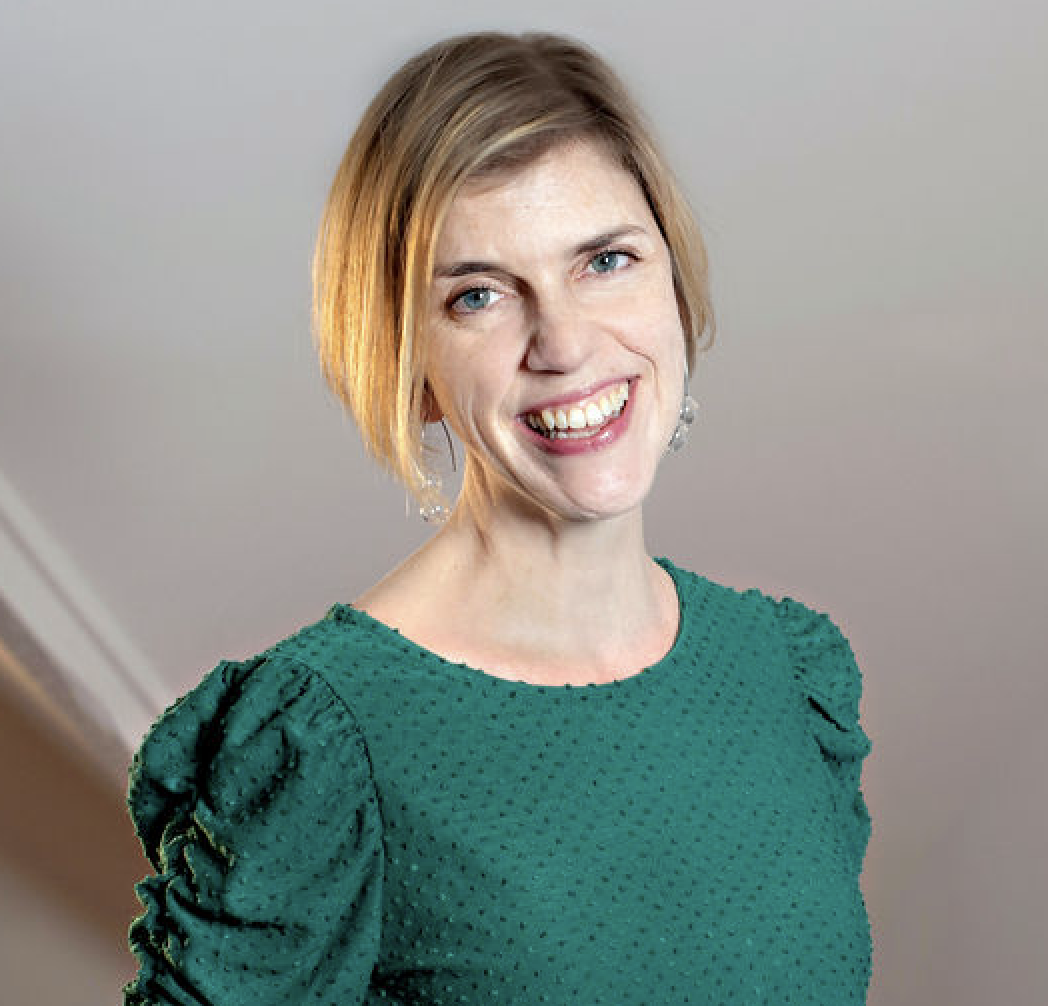
Lauree Ostrofsky, CPC, PCC is a sought-after business and marketing strategist. Over the past 20 years, she has guided owners and leaders to tap into clarity and confidence in order to create meaningful work and build organizations that last.
Most recently, she added consulting with banks and foundations to her portfolio, designing wraparound services and business education that set loan and grant recipients up for long-term sustainability and success.
Lauree is the author of two books, I’m scared & doing it anyway, and, Simply Leap, and the proud founder of Hudson Valley Women in Business, which she grew into a vibrant community of more than 3,000 leaders across New York State. Her impact has earned her recognition as a Hudson Valley Magazine Women in Business honoree and an Athena Leadership Award winner.
With a rare blend of compassion, credibility, and proven results, Lauree is a trusted voice for leaders and organizations ready to take brave, lasting leaps forward.